Wooden Floor Black Marks in Commercial Property | Professional Floor Restoration
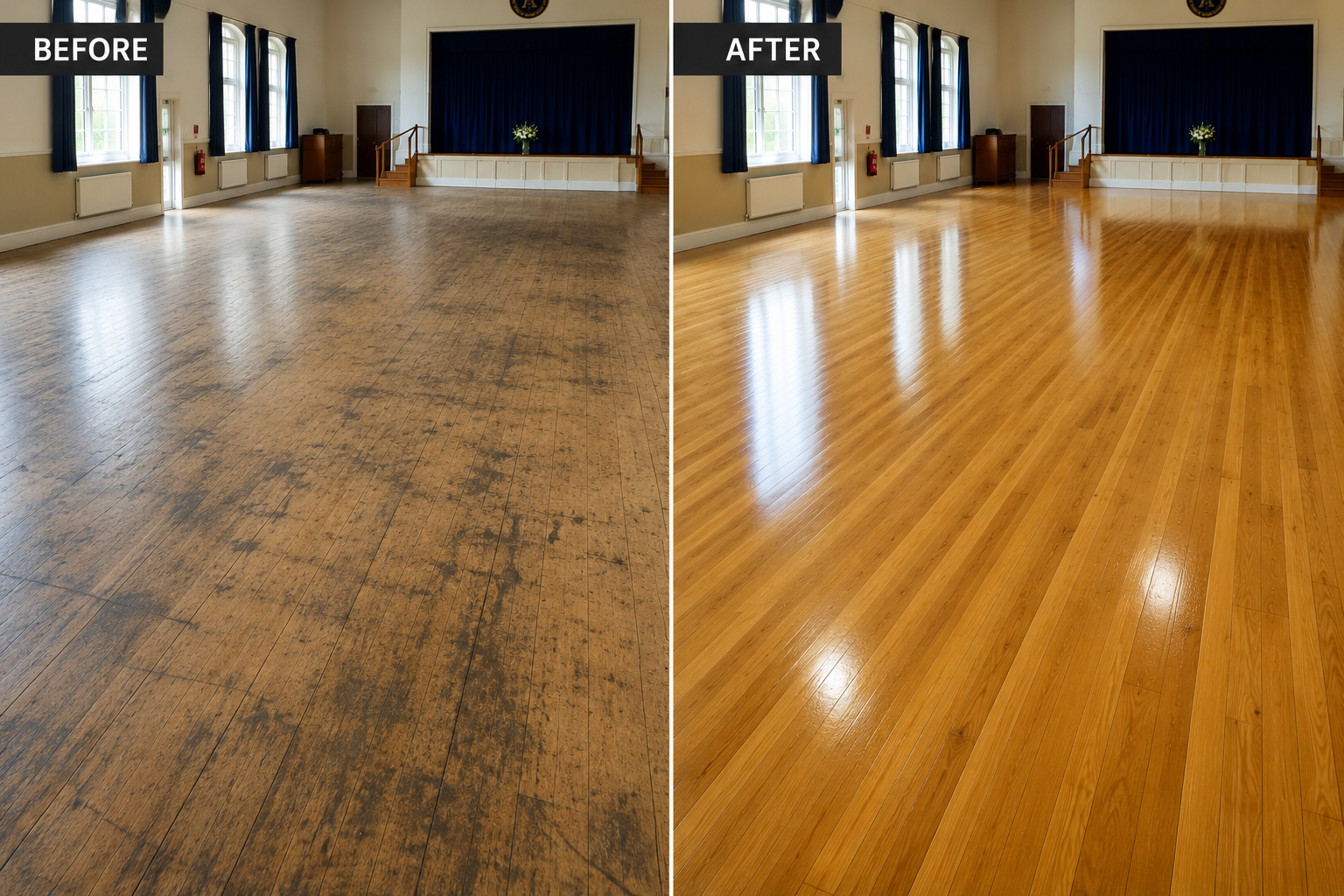
Black marks on commercial wooden floors are rarely just a cosmetic issue. In busy Hampstead properties, including schools near Haverstock Hill, churches, community halls, healthcare buildings, offices, independent retailers around Hampstead High Street, and period commercial buildings within the Hampstead Conservation Area, dark staining often indicates heavy foot traffic, trapped moisture, deteriorating finishes, rubber transfer, or years of neglected maintenance.
If left untreated, these marks can become embedded within the timber, allowing further wear that eventually requires extensive repairs rather than routine restoration. Our experienced team provides professional Commercial wood floor maintenance, specialist Commercial floor sanding, and reliable Commercial floor sanding contractor services throughout Hampstead, helping businesses, schools, churches and public buildings restore worn timber floors safely, efficiently and with minimal disruption.
Why Do Black Marks Appear on Commercial Timber Floors?
After more than 25 years restoring commercial timber flooring across London, we’ve found that black marks rarely have a single cause. Every building is different, and understanding why staining has developed is essential before deciding whether local repairs, full sanding or complete restoration is required.
- Rubber shoe scuffs from heavy pedestrian traffic
- Furniture movement and trolley wheels
- Moisture penetrating damaged lacquer
- Water spills left beneath entrance mats
- Oxidised iron fixings reacting with damp timber
- Old polish and wax contamination
- Ground-in dirt trapped within worn finishes
- Historic staining in older parquet flooring
Many commercial customers initially believe these marks can simply be cleaned away. Unfortunately, once staining has penetrated below the protective finish, professional restoration is normally the only reliable long-term solution.
Our Commercial Timber Floor Restoration Process
1. Initial Assessment & Planning
Every project begins with a detailed inspection of the floor’s construction, age, previous coatings and level of wear. We assess moisture levels, identify damaged boards, inspect loose parquet blocks, examine expansion gaps and determine whether black marks are surface contamination or have penetrated the timber itself.
For larger commercial premises we can prepare quotations using photographs, floor measurements, videos or arrange a site visit where appropriate. This helps minimise disruption while ensuring accurate pricing.
2. Repairs, Board Replacement & Gap Filling
Before sanding begins, damaged sections are repaired. Loose parquet blocks are securely re-fixed, broken boards replaced with carefully matched timber where possible, and unstable flooring stabilised before restoration proceeds.
Depending on the floor’s condition, we may also carry out:
- Replacement of damaged timber boards
- Parquet block repairs
- Floorboard tightening
- Gap filling using compatible resin systems
- Replacement of missing sections
- Minor subfloor corrections where required
3. Dust-Controlled Sanding & Surface Preparation
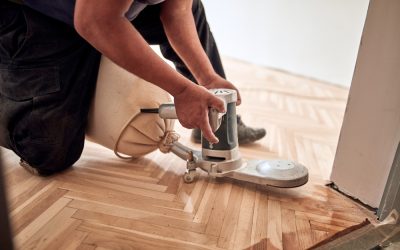
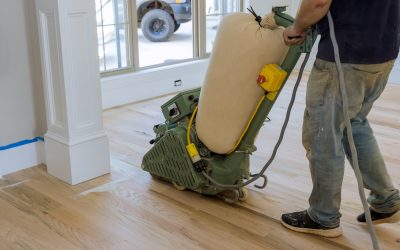
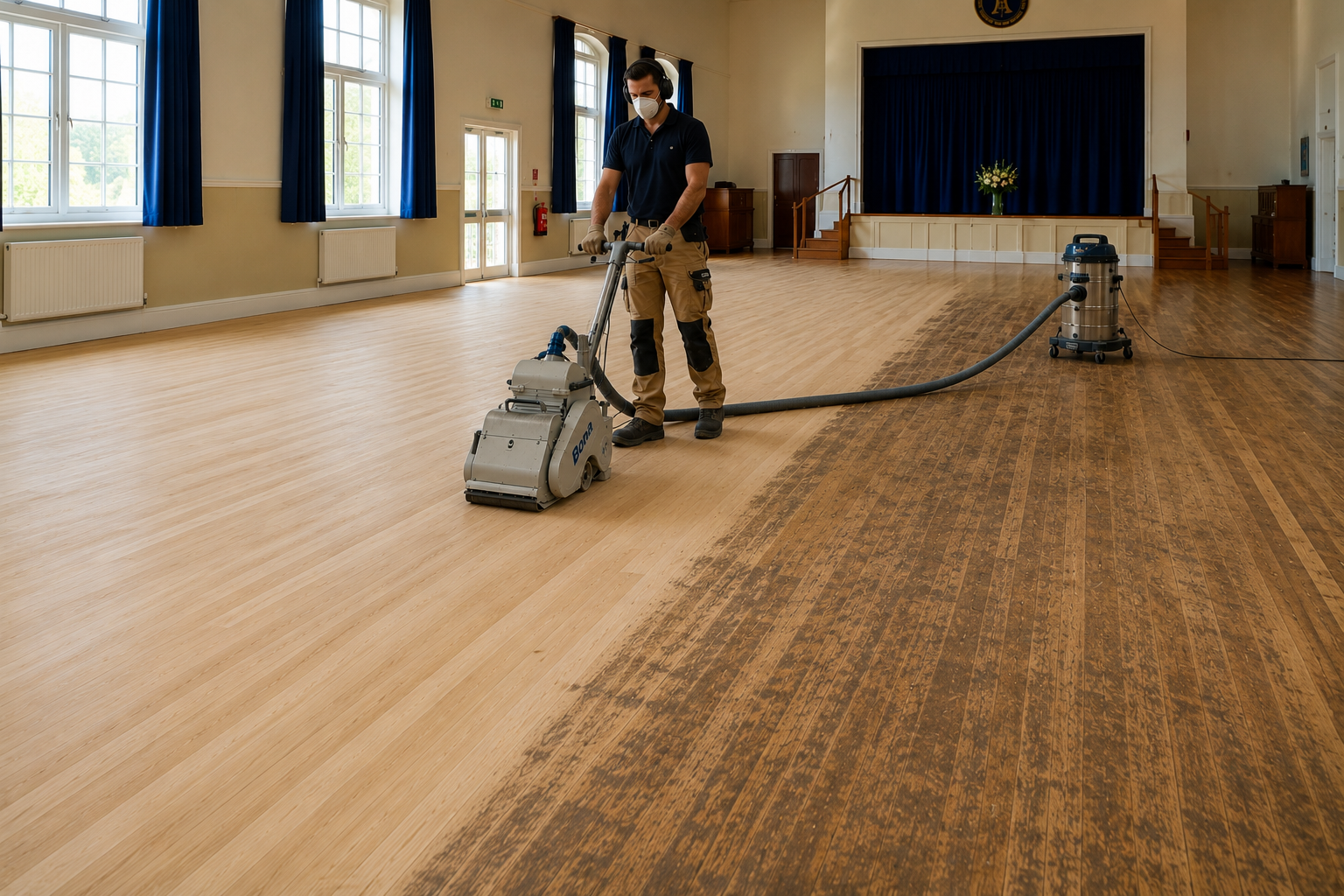
Using modern dust-controlled sanding machinery, we gradually remove worn finishes, surface contamination and many embedded black marks without unnecessarily removing excessive timber.
Each floor receives a carefully planned sanding sequence using progressively finer abrasives to achieve a smooth, even surface ready for finishing. Edges, corners and difficult access areas receive the same attention as open floor areas.
Where staining extends deeply into the wood fibres, we explain realistic expectations before work begins. Honest advice is always preferable to unrealistic promises.
4. Commercial Finishing Options
Choosing the right finish depends on how the building is used rather than simply its appearance.
- Commercial lacquer for schools and high-footfall buildings
- Natural oils to enhance timber character
- Hardwax oil for traditional interiors
- Two-component (2K) commercial finishes for maximum durability
- Matt, satin or gloss finishes
- Optional colour staining where appropriate
We regularly specify professional finishing systems from Bona, Loba, Osmo and Junckers, selecting products according to traffic levels, drying times and long-term maintenance requirements.
5. Aftercare & Planned Maintenance
Commercial timber flooring lasts considerably longer when maintenance is planned rather than reactive. We provide practical guidance tailored to each premises, including cleaning recommendations, entrance matting advice, furniture protection, inspection intervals and future recoating schedules.
Many businesses can avoid expensive full restoration simply by carrying out periodic maintenance before the protective finish wears through completely.
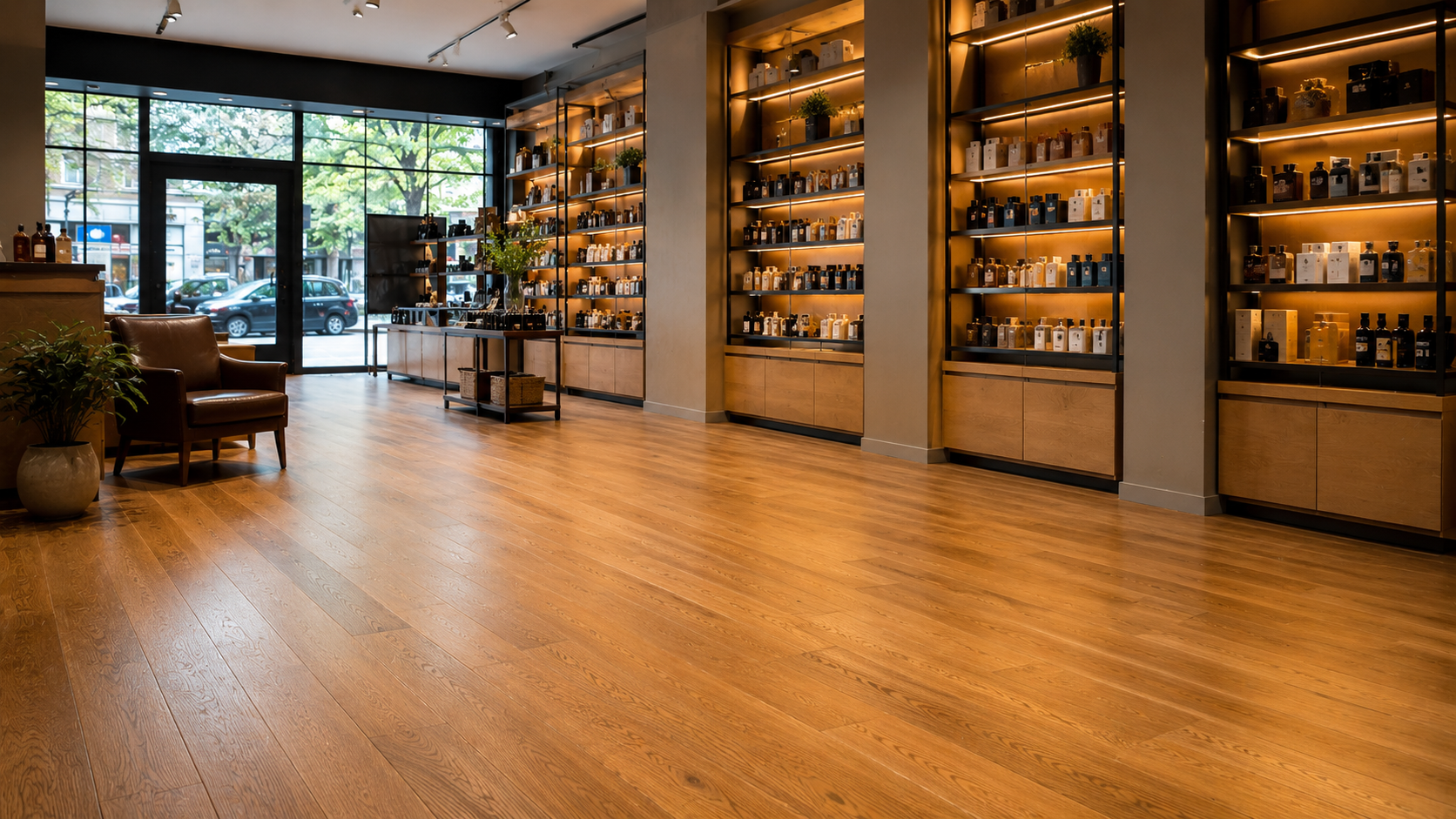
Commercial Properties We Regularly Restore
- Schools and academies
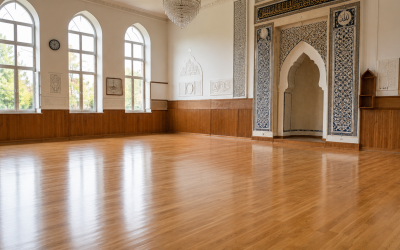
- Churches and parish halls
- Community centres
- Office buildings
- Retail premises
- Restaurants and cafés
- Hotels and hospitality venues
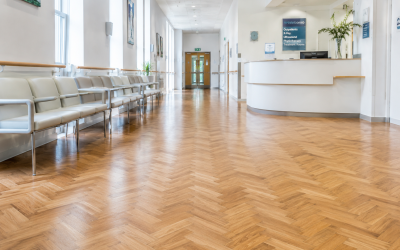
- Healthcare facilities
- Historic and listed buildings
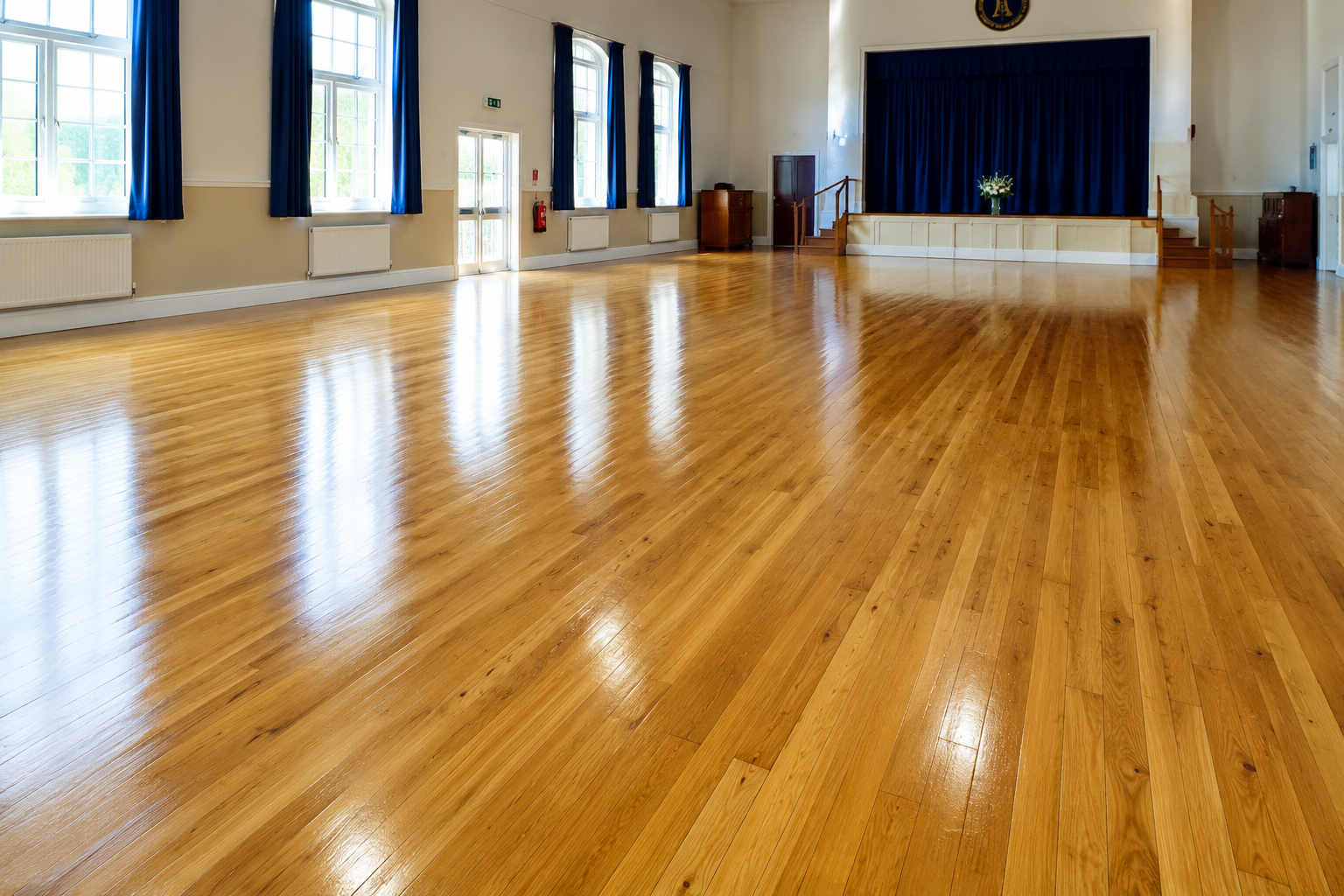
- Public halls and event venues
Working Around Your Business
Commercial projects require careful scheduling. We regularly plan work around school holidays, church activities, office operating hours, hospitality trading times and public access requirements to minimise disruption while maintaining safe working conditions throughout the project.
Our dust-controlled equipment significantly reduces airborne dust compared with older sanding systems, helping maintain cleaner working environments during restoration.
Frequently Asked Questions About Black Marks on Commercial Wooden Floors
1. What causes black marks on commercial wooden floors?
Black marks are commonly caused by heavy foot traffic, rubber-soled shoes, trolley wheels, furniture movement, trapped moisture, or worn protective finishes. In older buildings, moisture reacting with metal fixings or prolonged water exposure can also stain the timber beneath the surface.
2. Can black marks be removed without sanding the floor?
Surface scuff marks can sometimes be cleaned using specialist products. However, if the staining has penetrated the timber or the protective finish has worn away, professional sanding and refinishing is usually the most effective long-term solution.
3. Are black marks a sign of water damage?
Not always. While moisture can cause dark staining, black marks may also result from everyday wear, dirt embedded in old finishes, or rubber transfer. A professional inspection will determine the exact cause and the most suitable treatment.
4. Will sanding remove all black stains from the timber?
Most surface and moderate stains can be removed during the sanding process. Very deep stains that have penetrated far into the wood fibres may require localised repairs, board replacement, or specialist stain treatments to achieve the best possible result.
5. Can you repair damaged boards before restoring the floor?
Yes. Any loose parquet blocks, cracked boards, damaged sections, or gaps are assessed before sanding begins. Carrying out repairs first ensures the restored floor is structurally sound and provides a consistent finish.
6. How much disruption does commercial floor restoration cause?
Professional commercial floor restoration is carefully planned to minimise disruption. Work can often be scheduled outside normal business hours, during school holidays, weekends, or phased around occupied areas to keep your premises operational.
7. Is the sanding process dust-free?
Modern dust-controlled sanding equipment captures the vast majority of sanding dust during the restoration process. Although no sanding system is completely dust-free, professional extraction systems significantly reduce airborne dust compared with older machinery.
8. Which finish is best for a busy commercial property?
The ideal finish depends on how the floor is used. Two-component commercial lacquers are often recommended for schools, offices, restaurants, and other high-traffic environments due to their excellent durability, while hardwax oils are popular where a more natural appearance is preferred.
9. How often should commercial wooden floors be professionally maintained?
This depends on foot traffic and the type of finish applied. Many commercial floors benefit from regular inspections and periodic maintenance every few years, helping to extend the life of the finish and avoid the cost of a complete restoration.
10. How can I get a quotation for commercial wooden floor restoration?
A quotation can often be provided using photographs, videos, floor measurements, and details about the property’s use. For larger or more complex projects, a site visit may be arranged to assess the floor’s condition and recommend the most appropriate restoration programme.

Why Commercial Clients Choose Our Team
- Over 25 years of practical commercial flooring experience
- Experience with heritage and listed properties
- Modern dust-controlled sanding machinery
- Clear, honest recommendations
- Premium professional finishing products
- Flexible scheduling for occupied buildings
- Detailed quotations with no unnecessary work
- Solutions tailored to the condition of each floor
Recent Articles
- Wooden Sports Floor Needs Re-Marking
- Shopping Mall Floor Sanding in Hampstead NW3
- Care Home Floor Sanding in Hampstead NW3
What you should do next
If black marks are beginning to spoil the appearance of your commercial timber flooring, early intervention can often prevent significantly more expensive repairs later. Whether you manage a school, church, office, restaurant, retail premises or community building in Hampstead, we’ll recommend the most practical and cost-effective solution for your floor.
Call 0800 335 7565 for a fast quotation, or send photographs, videos and approximate measurements by WhatsApp or email for an initial assessment. Where required, we can also arrange a convenient site inspection before preparing a detailed quotation.