Mosque Wood Floor Sanding In Hampstead NW3 | Commercial Floor Restoration
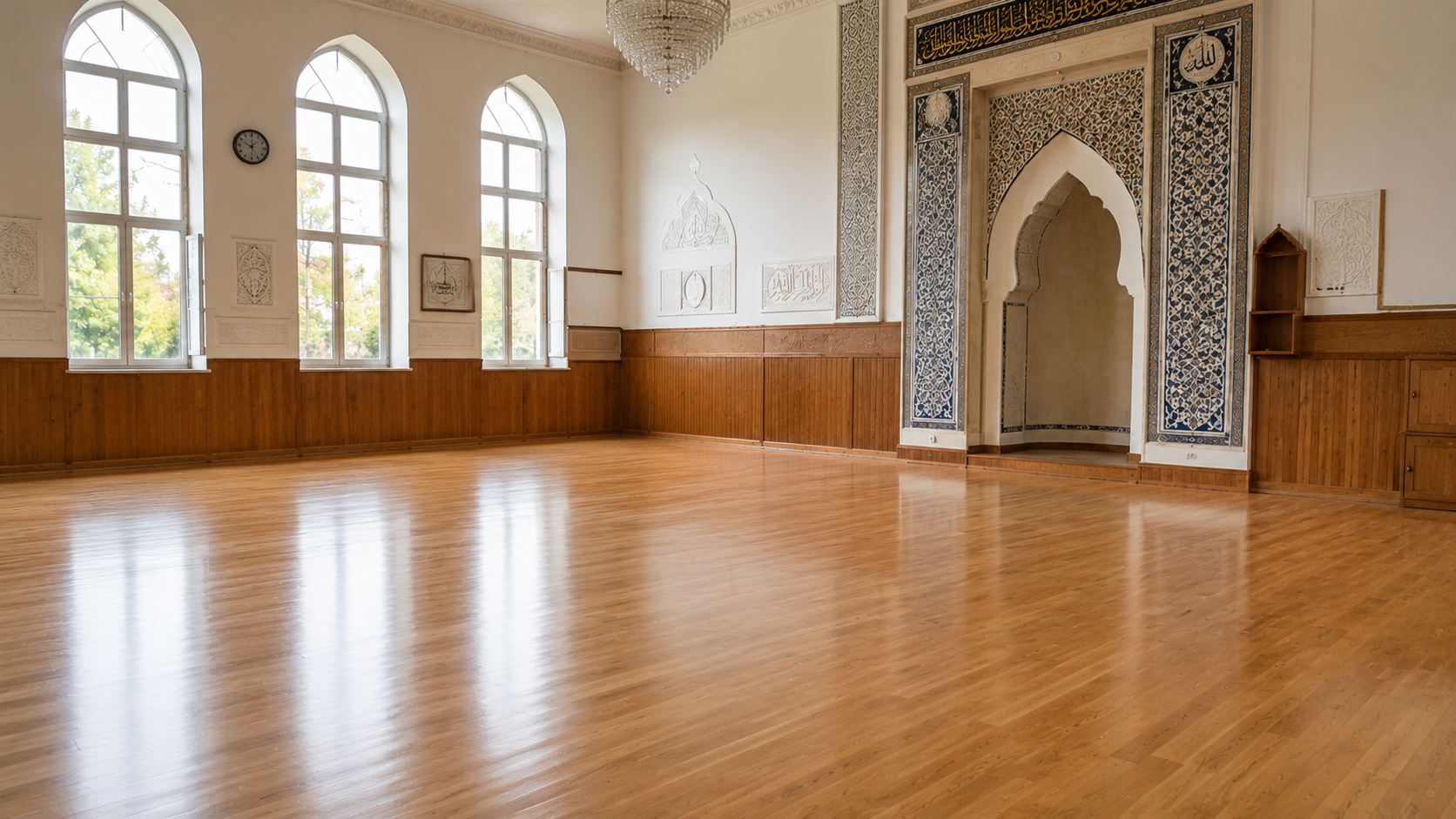
Mosques throughout Hampstead NW3 serve their communities every day, welcoming large numbers of worshippers for daily prayers, Friday congregations, educational activities and community events. Over time, constant foot traffic gradually wears timber flooring, leaving protective finishes thin, surfaces scratched and parquet blocks or floorboards vulnerable to movement. Our experienced specialists provide professional mosque wood floor sanding services that restore both the appearance and durability of wooden prayer hall floors while respecting the building’s daily schedule.
Working across Hampstead, including areas around Hampstead High Street, Frognal, South End Green, Belsize Park and nearby conservation areas, we restore traditional and modern timber flooring using commercial-grade equipment and premium finishing systems. If you’re looking for Commercial wood floor maintenance in Hampstead, professional Commercial floor sanding in Hampstead, or an experienced Commercial floor sanding contractor in Hampstead, our team provides practical advice and tailored restoration programmes for every building.
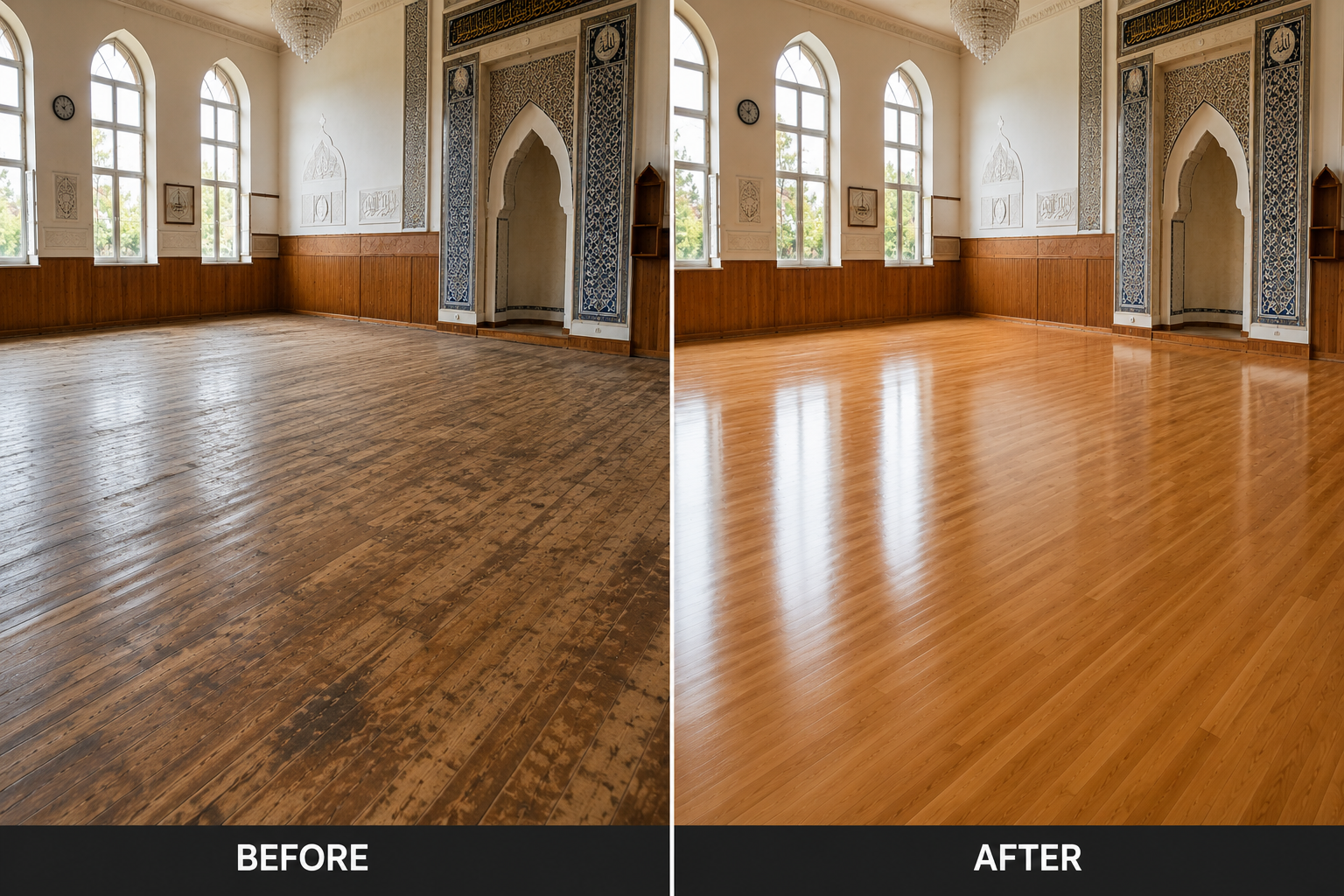
Professional Restoration for Mosque Timber Floors
Prayer hall flooring experiences unique demands. Shoes may be removed before entering the prayer area, but constant movement, furniture relocation, cleaning equipment and years of use can still wear away protective coatings. Older buildings may also develop loose parquet blocks, uneven floorboards, open joints and staining caused by moisture or historic finishes.
Our restoration work focuses on preserving the original timber wherever possible while improving safety, appearance and long-term durability. Every project begins with a thorough inspection so recommendations are based on the actual condition of the floor rather than a standard package.
Our Mosque Floor Restoration Process
1. Initial Assessment and Planning
Every floor is different. We assess timber species, previous finishes, moisture levels, structural movement, wear patterns and any damaged areas before recommending the most appropriate restoration method. We also discuss prayer schedules, access requirements and suitable working hours to minimise disruption.
For many projects, we can prepare an initial quotation using photographs, videos and approximate measurements before arranging a site inspection if required.
2. Repairs, Board Replacement and Gap Filling
Before sanding begins, damaged sections are repaired to create a stable surface. This may include replacing broken boards, securing loose parquet blocks, tightening movement within the floor and filling appropriate gaps where this benefits the finished appearance and ongoing performance.
Our objective is always to retain as much original flooring as possible while ensuring the restored surface performs well under continuous use.
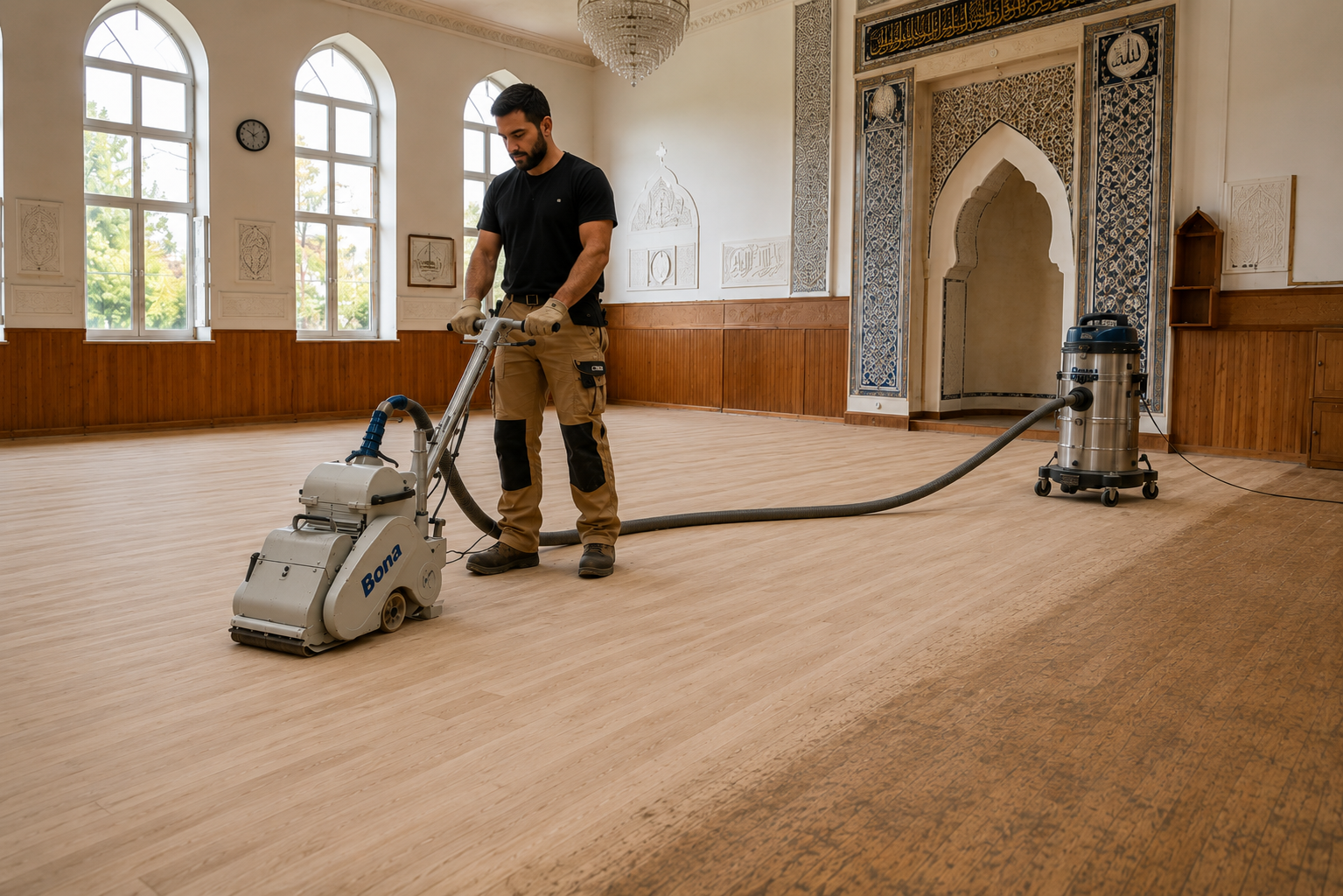
3. Sanding and Surface Preparation
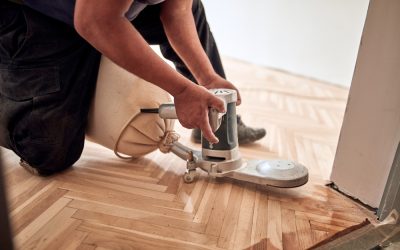
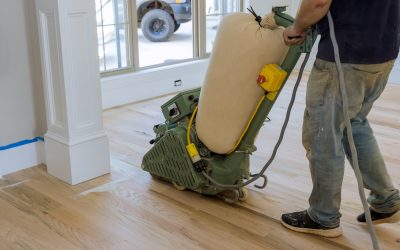
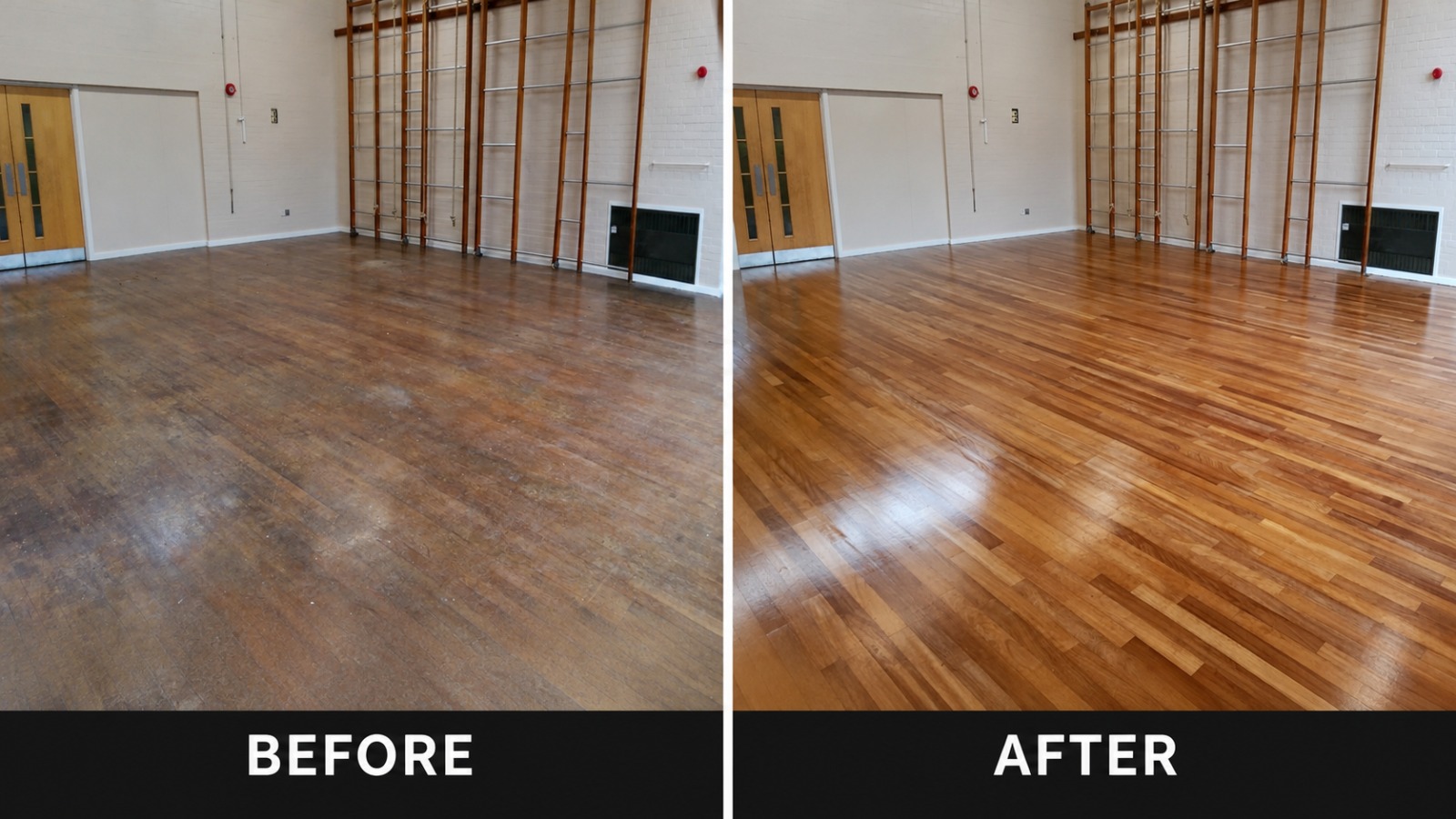
Professional dust-controlled sanding machinery removes worn coatings, scratches, staining and uneven areas while preserving the integrity of the timber. Multiple sanding stages progressively refine the surface, producing a smooth, consistent finish ready for sealing.
Dust extraction systems significantly reduce airborne dust, helping maintain a cleaner working environment within active religious buildings and surrounding community spaces.
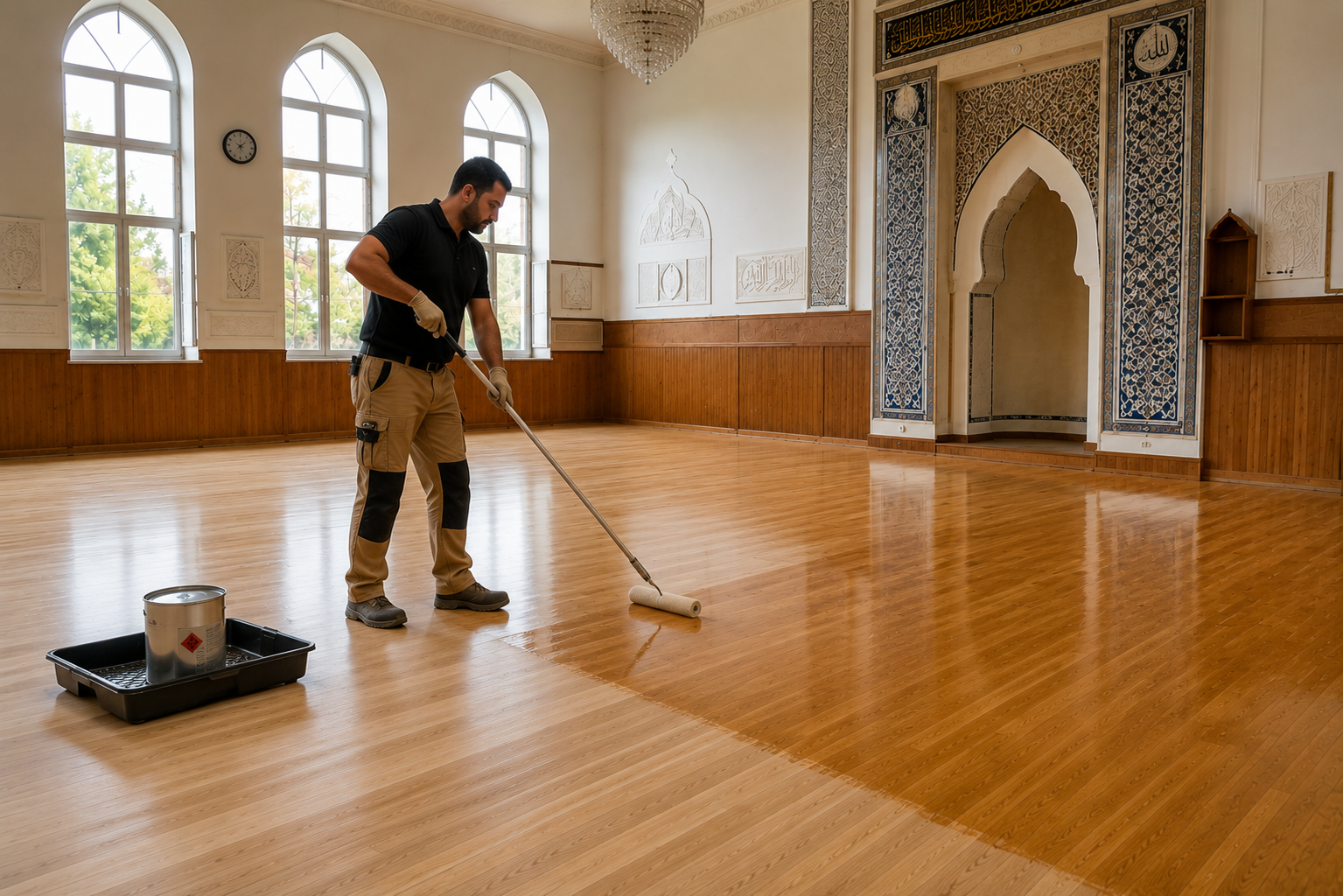
4. Finishing Options
The correct finish depends on how the floor is used. We recommend systems based on durability, maintenance requirements, appearance and drying times rather than simply choosing the most expensive option.
- Commercial polyurethane lacquer for high-traffic prayer halls.
- Natural oils to enhance timber character.
- Hardwax oil finishes offering excellent repairability.
- Two-component (2K) commercial finishes for maximum durability.
- Low-sheen and satin finishes suitable for heritage interiors.
We regularly specify professional systems from Bona, Loba, Osmo and Junckers, depending on the requirements of each project.
5. Aftercare and Ongoing Maintenance
Restoring a timber floor is only the beginning. We provide practical maintenance advice covering routine cleaning, protective measures, furniture movement, entrance matting and periodic inspections to maximise the lifespan of the new finish.
Planned maintenance often proves more economical than waiting until complete refinishing becomes necessary.
Why Experience Matters for Mosque Floor Restoration
Commercial and heritage timber floors require specialist knowledge. Different timber species, historic construction methods and previous coatings all influence the restoration process. With more than 25 years of practical experience working on commercial and public buildings, we understand how to balance preservation with modern performance requirements.
- Dust-controlled sanding equipment.
- Commercial-grade finishing systems.
- Safe working practices.
- Flexible scheduling around prayers and community activities.
- Honest recommendations based on floor condition.
- Clear quotations with no unnecessary work.
Working Around Your Schedule
Mosques operate throughout the week, making careful planning essential. Wherever possible, restoration work is arranged around prayer times, educational programmes and community events. Evening, weekend and phased working programmes can often be arranged for larger facilities to minimise disruption.
Suitable for All Mosque Timber Floors
- Prayer halls
- Community halls
- Entrance areas
- Meeting rooms
- Multi-purpose halls
- Educational facilities
- Parquet flooring
- Solid hardwood flooring
- Traditional timber floorboards
Frequently Asked Questions About Mosque Wood Floor Sanding in Hampstead NW3
How often should a mosque timber floor be professionally sanded?
The frequency depends on footfall, the type of timber, and the existing finish. Most mosque prayer hall floors benefit from professional sanding every 10–20 years, while regular maintenance and recoating can significantly extend the life of the finish between full restorations.
Can sanding remove deep scratches and worn areas from a mosque floor?
Yes. Professional floor sanding removes surface scratches, scuffs, old finishes and many stains, revealing fresh timber beneath. If the damage is particularly deep, localised repairs or board replacement may also be recommended before refinishing.
Do you use dust-free floor sanding equipment?
We use modern dust-controlled sanding machines with advanced extraction systems that capture the vast majority of sanding dust. This helps keep the working environment much cleaner than traditional sanding methods.
Can damaged parquet blocks or loose floorboards be repaired?
Yes. Before sanding begins, we inspect the floor for loose parquet blocks, damaged boards, movement and structural issues. Where possible, repairs are completed before the restoration process to create a stable and long-lasting floor.
Which finish is best for a mosque prayer hall floor?
The ideal finish depends on the level of daily use and maintenance requirements. Commercial-grade lacquers provide excellent durability, while hardwax oils and natural oils offer a more traditional appearance and are easier to repair in localised areas.
Can the work be scheduled around daily prayers and community activities?
Absolutely. We understand that mosques operate throughout the week, so work can often be arranged around prayer times, educational programmes and community events. Flexible scheduling helps minimise disruption wherever possible.
Will sanding change the natural appearance of the timber?
No. Sanding removes old coatings and imperfections while preserving the natural beauty of the timber. If required, wood stains can also be applied before finishing to achieve a lighter, darker or more uniform appearance.
How long does the restoration process usually take?
The duration depends on the size of the prayer hall, the condition of the floor and the chosen finish. Smaller projects may be completed within a few days, while larger mosque floors requiring repairs and multiple finish coats can take longer.
Can you provide a quotation without visiting the site first?
In many cases, yes. We can often prepare an initial estimate using photographs, videos and approximate floor measurements. A site visit may then be arranged if a more detailed assessment is required before work begins.
How can we keep our restored mosque floor looking its best?
Regular cleaning using appropriate wood floor products, protective entrance matting, prompt removal of spills and periodic maintenance inspections will help preserve the finish. We also provide tailored aftercare advice to ensure your restored timber floor remains in excellent condition for many years.

Serving Hampstead NW3
We regularly work throughout Hampstead NW3, including properties close to Hampstead Heath, Frognal, Belsize Park, South End Green, Finchley Road and surrounding conservation areas. Whether restoring a historic timber prayer hall or maintaining a modern mosque facility, every project receives the same careful planning and attention to detail.
Request Your Free Quote
If your mosque floor has become scratched, worn, uneven or difficult to maintain, we’re happy to help. Call 0800 335 7565 for expert advice and a competitive quotation. You can also send photographs, videos and approximate measurements by WhatsApp or email for an initial assessment before arranging a convenient site visit.

Recent Articles
- Hospital Floor Sanding In Hampstead NW3
- How Often Should School Floors Be Sanded
- Shop Floor Sanding in Hampstead NW3
- Care Home Floor Sanding in Hampstead NW3