School Floor Sanding in Hampstead NW3
School floor sanding in Hampstead NW3 requires considerably more planning than restoring a domestic timber floor. In a busy school, nursery or college, worn lacquer, exposed timber, loose parquet blocks and years of chemical cleaning can leave floors difficult to maintain and potentially hazardous underfoot. The work has to be carried out properly, with suitable dust control, commercial-grade finishes and a realistic programme that allows teaching to resume safely.
Hampstead Floor Sanding provides professional timber floor repairs, sanding and refinishing for educational premises throughout NW3. From Victorian schoolrooms near Hampstead High Street to Edwardian institutional buildings around Fitzjohn’s Avenue and Belsize Park, older educational properties often contain pitch pine boards, traditional oak strip flooring or parquet that deserves careful assessment before machinery touches it. Our approach to School Floor Restoration in Hampstead starts with identifying the timber, understanding its condition and establishing how the premises can remain operational during the project.
Whether the requirement is a complete hall refurbishment, School Floor maintenance in Hampstead during the summer holidays, or School Floor Refinishing in Hampstead over a half-term break, the specification must suit the actual use of the building. A reception classroom, dance studio, assembly hall and sports facility do not necessarily need the same surface finish. Call 0800 335 7565 to discuss your premises and arrange an assessment.
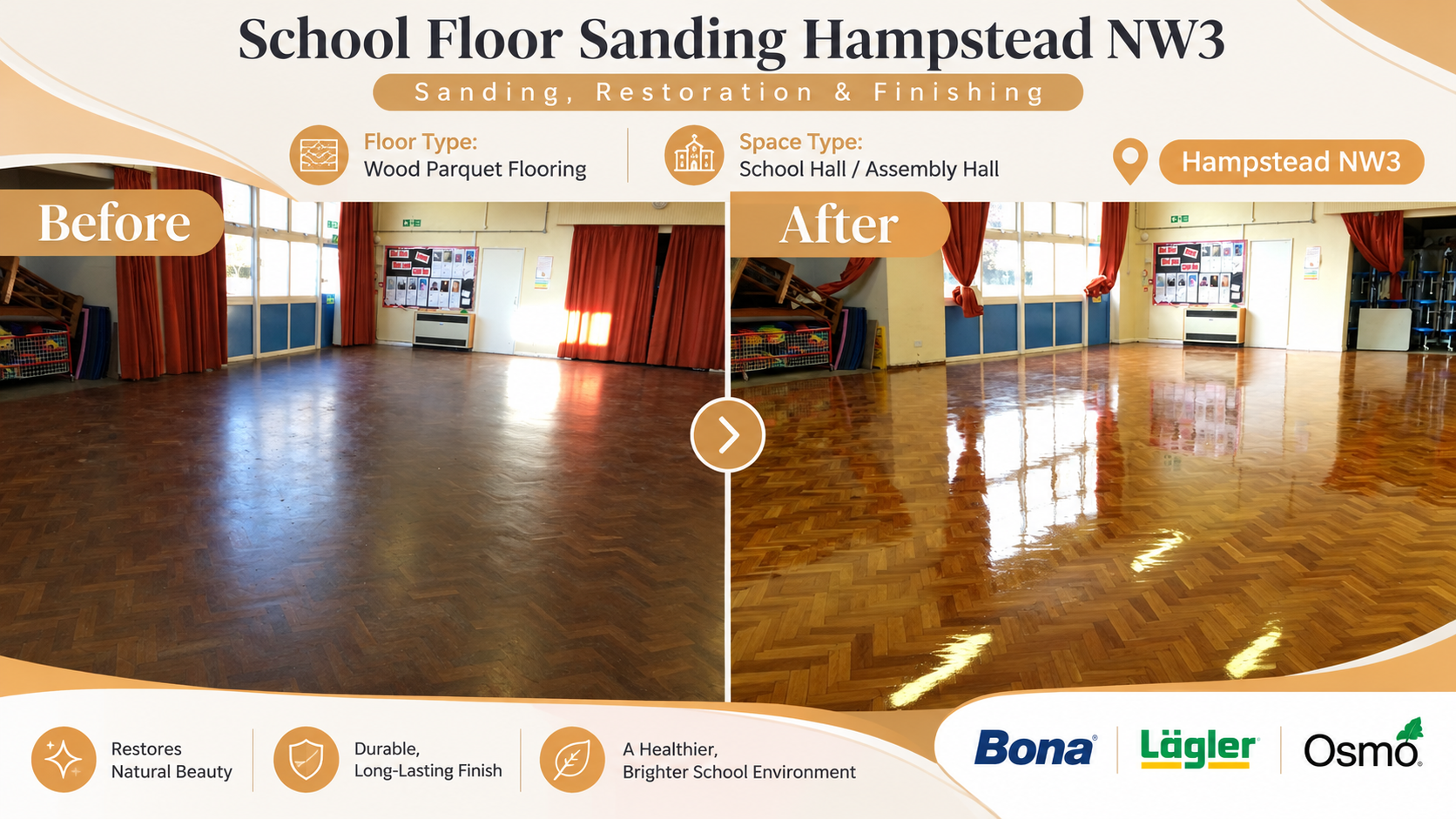
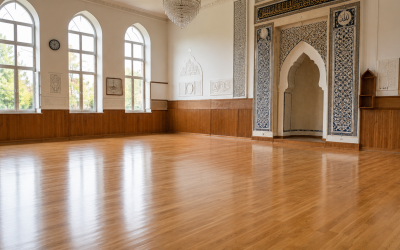
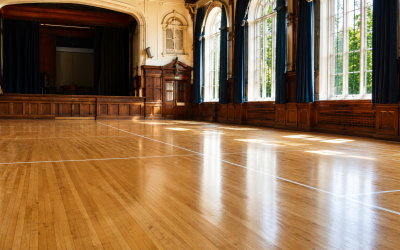
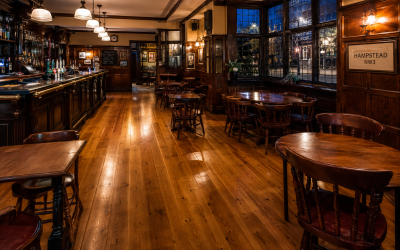
School floor sanding transformation in Hampstead NW3 – before and after restoration of wooden parquet flooring in a school assembly hall, showcasing a renewed, polished finish.
Timber Floor Restoration for Schools, Nurseries and Educational Buildings in NW3
School floors take punishment that most residential floors never encounter. Chair legs drag across the same areas daily, tables are moved for assemblies, sports equipment marks the surface, and entrances collect grit carried in from playgrounds. In younger children’s classrooms, frequent cleaning and occasional liquid spillages put additional pressure on the protective finish.
We assess timber flooring in primary and secondary schools, independent schools, academies, Montessori nurseries, preschools, special educational needs facilities, sixth-form colleges and further education centres. The same principles apply to university teaching rooms, language schools, music and performing arts schools, tuition centres, adult learning facilities, childcare centres and after-school clubs.
Hampstead’s building stock brings its own difficulties. Victorian conversions around Flask Walk and Well Walk may have original suspended timber floors with uneven joists and generations of repairs. Larger Edwardian educational buildings near Rosslyn Hill and Heath Street may have substantial areas of narrow-strip flooring, old parquet adhesives and thresholds that have moved slightly over time.
Buildings close to Hampstead Heath, the Hampstead Conservation Area and residential streets around Church Row can also impose practical restrictions on vehicle access, waste handling and noisy working hours. These details need checking before a contractor promises an overnight turnaround.
Why School Floors Deteriorate: Structural Wear, Cleaning Chemicals and Slip Risks
An old school floor can appear reasonably sound until the remaining lacquer starts wearing through. Once the protective film has gone, water and cleaning chemicals reach the timber itself. Repeated wet cleaning can raise the grain, darken joints and encourage movement in inadequately bonded blocks.
Domestic floor polish is rarely an adequate remedy. Some products leave a temporary shine but introduce maintenance incompatibilities or reduce traction, while silicone-containing dressings can cause serious adhesion problems when the floor is eventually recoated.
- Open board joints: Gaps collect grit, food debris and cleaning residues, making effective hygiene routines more difficult and creating potential snagging points.
- Loose parquet blocks: Failed adhesive can allow individual blocks to rock or lift, particularly around doorways and heavily trafficked routes.
- Worn slip-resistant surfaces: Polished traffic lanes, cleaning residues and unsuitable coatings can alter slip performance, especially when floors become wet.
- Moisture ingress: Persistent dampness beneath timber can produce cupping, distortion, adhesive failure and localised deterioration.
- Splinters and damaged edges: Exposed pitch pine or hardwood edges require attention in classrooms where young children spend time on the floor.
- Incompatible previous finishes: Old wax, oil, lacquer and maintenance products can react differently to new coatings, causing peeling, patchiness or poor adhesion.
A floor should not be sanded simply because it looks tired. Loose timber, damp subfloors and unsuitable previous treatments need investigating first. Otherwise, an expensive new lacquer system may fail long before its expected service life.
Our Commercial School Floor Sanding and Restoration Process
A successful school refurbishment follows a defined sequence: survey, moisture checks, structural repairs, controlled sanding, finish selection and managed handover. Skipping any of these stages can create problems once pupils and staff return.
Step 1: Subfloor Audit, Timber Identification and Moisture Testing
The first job is to establish exactly what is beneath our feet. Quartersawn oak, pitch pine, teak and engineered timber behave differently under sanding and respond differently to moisture. Older parquet installations may also have historic adhesives or previous treatments that influence the repair specification.
We look for loose blocks, springing boards, exposed fixings, hollow areas and signs of moisture movement. Where a ground-bearing substrate is involved, suitable hygrometer testing helps establish subfloor relative humidity in accordance with the relevant BS 8203 or BS 8201 guidance and the flooring manufacturer’s requirements. Timber moisture readings are taken alongside an assessment of building conditions.
Suspended floors require a different approach, including checks for ventilation, timber condition and possible moisture sources beneath the boards. Where older bituminous adhesives, suspicious floor coverings or other potentially asbestos-containing materials are encountered, work is stopped pending appropriate identification and the necessary asbestos information. Sanding an unidentified historical substrate is not an acceptable shortcut.
Step 2: Timber Repairs, Parquet Re-bonding and Resin-Slurry Gap Filling
Loose parquet cannot be made sound by applying more lacquer over it. Unstable blocks are lifted where necessary, old adhesive is removed as appropriate, and the substrate is prepared before re-bonding. For suitable installations, a compatible silane-based flexible parquet adhesive provides a strong bond while accommodating normal timber movement.
We match replacement timber by species, dimensions and grain as closely as practicable. This matters particularly with old pitch pine, where modern softwood replacements can look noticeably different and wear at a different rate.
Fine, stable joints may be filled using a resin-slurry mixture made with clean sanding dust of the correct timber species. Wider gaps or moving boards require a more considered repair, such as timber slivers or appropriate flexible filling systems. Resin slurry is not a permanent structural solution for a floor that continues to move.
Step 3: HEPA Dust-Controlled Sanding and Surface Preparation
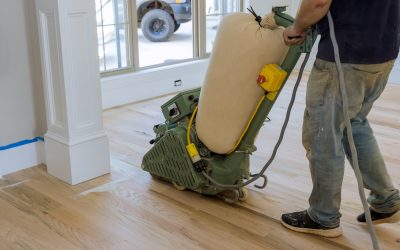
For substantial timber areas, the Lägler Hummel belt sander provides controlled cutting across worn surfaces. The abrasive sequence is selected according to the existing finish, timber thickness and floor condition, rather than starting aggressively with the coarsest paper available. Edges, corners and areas around fixed furniture need separate machines and hand finishing.
Commercial dust management calls for properly maintained, compatible extraction equipment and sealed work zones. HEPA H14 filtration may form part of the extraction strategy where specified, supported by appropriate vacuuming, containment and housekeeping. No sanding operation should be described as literally dust-free, particularly in a building with sensitive occupants.
Classroom doors, ventilation routes, computers, books and stored teaching materials need protection before sanding starts. A final fine sanding and thorough dust removal are essential because abrasive scratches or residual dust become much more obvious after clear lacquer is applied.
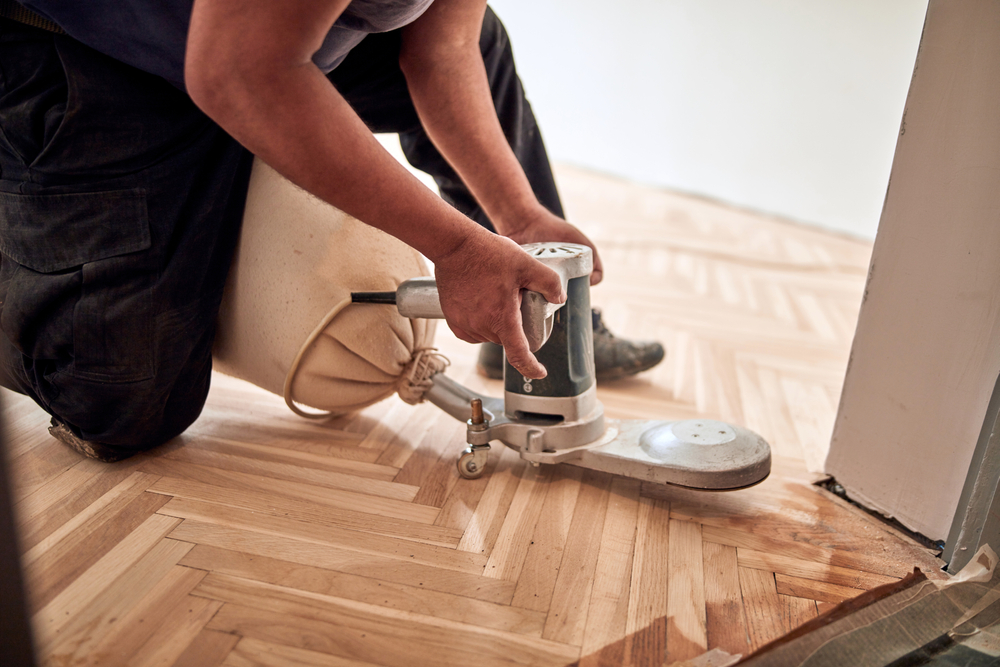
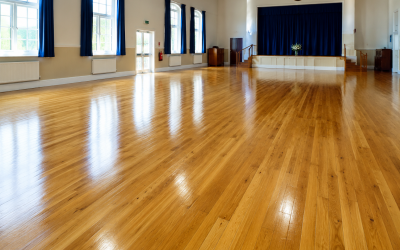
Expert school floor sanding in Hampstead NW3, restoring worn parquet flooring to a smooth, durable finish for classrooms, halls and educational spaces.
Step 4: High-Traffic Lacquers, Hardwax Oils and Anti-Slip Finishes
The finishing system is chosen for wear resistance, cleaning requirements, slip performance and the time available before reopening. In heavily used classrooms, corridors and assembly halls, a two-component waterborne polyurethane lacquer is often a sensible specification. These 2K coatings use a separately mixed hardener or cross-linking catalyst to develop improved chemical and abrasion resistance after curing.
One established commercial option is Bona Traffic HD, a two-component waterborne lacquer designed for heavily trafficked timber floors. Its published technical information includes short return-to-service times under defined conditions, but those times should never be treated as a guarantee for every school site.
Traditional timber rooms, certain teaching spaces and areas where localised repairability matters may suit a hardwax-oil system instead. Osmo Polyx-Oil Anti-Slip is one example intended for timber flooring requiring increased slip resistance. The suitability of any oil or lacquer depends on its technical data, intended use and maintenance regime.
For products installed in occupied educational premises, we consider VOC emissions, safety data sheets, ventilation and evidence such as EMICODE EC1 Plus low-emission certification where applicable. EC1 Plus is a product-specific classification, not a blanket claim that every lacquer or adhesive carries the rating.
Slip Resistance and UK Safety Requirements
Slip resistance must be assessed against the intended conditions of use, rather than judged by how matt or glossy the finish appears. BS 7976-2 was historically used for pendulum slip testing, but it was withdrawn in 2022 and superseded by BS EN 16165:2021, with Annex C covering the pendulum method.
Where appropriate, independent wet and dry pendulum testing can be specified, with Pendulum Test Values assessed against current HSE guidance and the site’s risk profile. A wet PTV of 36 or above is commonly used as a low-slip-potential benchmark, but an anti-slip coating alone cannot replace effective cleaning, spill control and ongoing monitoring.
For sports halls, the finish may also need to satisfy relevant requirements under BS EN 14904 for indoor sports surfaces. A conventional classroom lacquer should not automatically be substituted for a specialist sports flooring system.
Step 5: Aftercare, Cleaning and Planned Floor Maintenance
Handing over a newly finished floor without a maintenance plan is asking for unnecessary wear. Schools need straightforward instructions covering suitable neutral or manufacturer-approved cleaners, damp rather than saturated mopping, spill removal and the fitting of protective pads beneath furniture.
We recommend regular inspections of entrance zones, corridors, door thresholds and chair-intensive teaching areas. When a lacquered surface remains intact, a properly prepared maintenance coat may restore protection without requiring another full sanding cycle. Once wear has reached bare timber, the repair becomes more involved.
Early maintenance is generally cheaper and less disruptive than waiting for exposed boards, contaminated joints and loose parquet to develop. The best interval depends on occupancy, cleaning practices and the floor’s actual rate of wear.
School Floor Sanding Around Term Dates and Active Teaching Hours
The difficult part of commercial restoration is often not the sanding itself. It is arranging deliveries, protecting occupied areas, controlling noise and leaving sufficient drying and curing time before the building is used again.
We plan suitable projects around half-term breaks, Easter closures, summer holidays, weekends and approved out-of-hours working. For premises near Hampstead High Street, South End Green or narrow residential roads, access restrictions and local noise considerations must be incorporated into the programme.
| Working Shift | Operational Benefits | Suitable Facilities |
|---|---|---|
| Overnight | Allows suitable preparation, repairs or scheduled coating work outside teaching hours, subject to local restrictions and sufficient curing time. | Colleges, university teaching facilities, training centres and selected classroom areas. |
| Weekend Phased | Provides a longer uninterrupted working window and allows managed handover before the next teaching session where the finish specification permits. | Primary schools, independent schools, nurseries, tuition centres and staff rooms. |
| Sectional | Separates the project into controlled work zones, helping keep unaffected areas accessible while maintaining appropriate exclusion barriers. | Larger school campuses, corridors, boarding schools, colleges and multi-room educational facilities. |
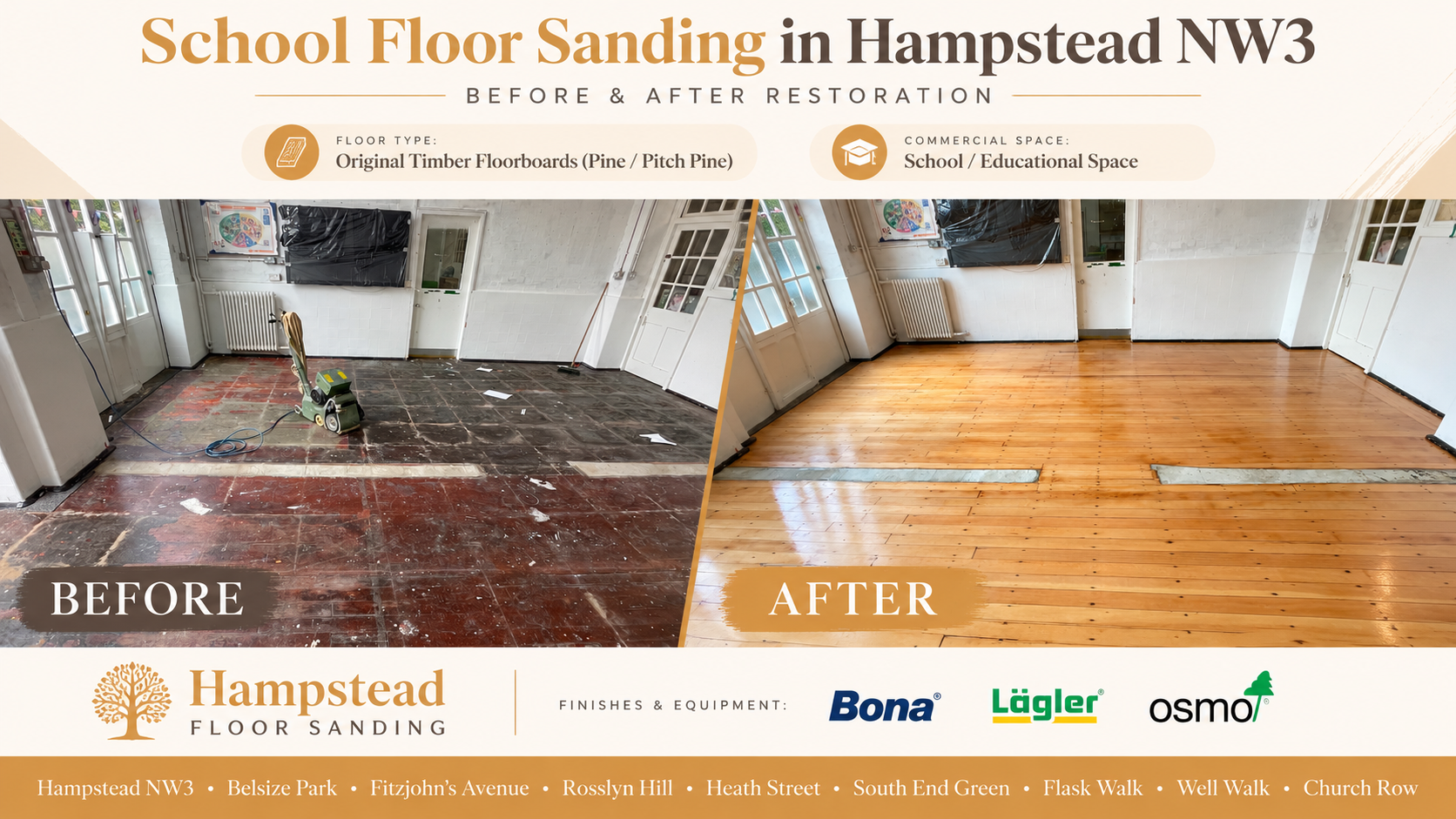
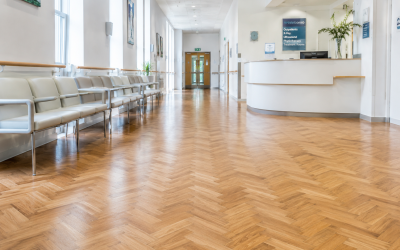
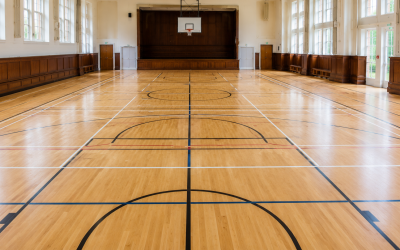
Before and after school floor sanding in Hampstead NW3 by Hampstead Floor Sanding, transforming worn original timber floorboards into a beautifully restored surface for an educational space.
Drying Times, Full Cure and Safe Reoccupation
There is a difference between a coating being touch-dry, accepting light foot traffic and reaching its final chemical resistance. Some specialist two-component lacquers permit light use within hours and full traffic after approximately 12 hours under the manufacturer’s stated conditions. Other systems require longer, particularly where temperature, humidity or ventilation are less favourable.
Moving desks, stacking chairs, laying protective covers or carrying out wet cleaning too early can damage a finish that looks perfectly dry. Full cure can take several days or longer depending on the product. The handover programme must follow the selected coating’s current technical data sheet, not a fixed promise that every floor will be ready the next morning.
Work zones should remain inaccessible to pupils until the surface is ready, equipment and waste have been removed, ventilation requirements have been satisfied and the area has been formally handed back to the responsible site manager.
Health, Safety and Safeguarding on School Floor Restoration Projects
Working inside an educational building requires more than competent sanding. The contractor and school must agree site access, emergency arrangements, safeguarding procedures, segregation of work areas and responsibility for reopening each space.
Before work begins, site-specific Risk Assessments and Method Statements (RAMS) should address sanding equipment, dust exposure, manual handling, electrical safety, noise, fire precautions, ventilation and any occupied areas nearby. COSHH assessments are required for relevant hazardous substances, including coating components, cleaning chemicals, adhesives and other materials identified during preparation.
Dust assessment should also account for the relevant HSE requirements for hardwood dust and mixed wood dust exposure. Extraction, suitable respiratory protective equipment where required, and correct cleaning procedures are necessary controls; an efficient sander alone is not a complete safety system.
Site managers should confirm requirements for DBS checks, supervised access, contractor identification, fire exits and deliveries before the project starts. Where CSCS carded operatives or specific site accreditations are required, these should be checked at procurement stage. Evidence of suitable commercial public liability insurance and any required employers’ liability cover should also be reviewed before appointment.
How Much Does School Floor Sanding Cost in Hampstead NW3?
School floor sanding prices depend on more than square metres. A clear, stable oak hall with good access is a different job from an old pitch pine classroom containing loose boards, floor-mounted fixtures, paint contamination and extensive repairs.
Our published floor sanding prices provide a useful starting point, with sanding-only work advertised from £22 per m² and sanding with clear lacquer from £25 per m². These are guide prices rather than a fixed commercial school quotation. Specialist repairs, high-performance coatings, out-of-hours labour and site-specific requirements may change the final figure.
For educational premises, a proper quotation should identify the proposed timber repairs, preparation standard, number of coating layers, chosen finish, working hours, drying allowances and any excluded work. It should also make clear whether furniture movement, access equipment, waste removal and additional testing are included.
You can also view our floor sanding and restoration gallery to see examples of timber preparation and finishing work. The actual specification for your school will be determined by the floor’s condition and operational requirements, rather than appearances alone.
School Floor Sanding for Different Educational Facilities
Nurseries, Preschools and Montessori Classrooms
Nursery floors need close attention to splinters, exposed joints, cleaning compatibility and the use of suitable low-emission materials. Children regularly sit or play directly on the floor, so smooth preparation and a properly cured finish are particularly important. Work should be scheduled around childcare attendance, not merely the contractor’s availability.
Primary and Secondary School Classrooms
Classroom flooring experiences repeated abrasion from chairs, desks and daily foot traffic. A robust lacquer specification, correctly repaired joints and sensible entrance matting can reduce the frequency of major refurbishment. Corridors and doorways often require particular attention because wear is rarely distributed evenly.
Assembly Halls, Sports Halls and Dance Studios
Larger halls often contain timber flooring subjected to assemblies, PE sessions, performances and community hire. We assess whether the existing floor is an ordinary timber installation or a purpose-designed sprung sports floor before selecting abrasives, coatings or repair methods. Sports markings, traction requirements and the performance of the underlying construction must be considered together.
Independent Schools, Colleges and Higher Education Buildings
Independent schools and colleges may have historic timber in libraries, lecture spaces, common rooms and formal halls. Some original oak and pitch pine floors have already been sanded several times, leaving limited material above the tongue or parquet bond line. Preserving usable timber thickness is often more important than removing every historic mark.
Special Educational Needs and Additional Support Facilities
These sites can require tighter arrangements for noise, odour, access changes and cleaning. The method statement and programme should reflect the needs of the setting, with clearly isolated work zones and a handover agreed with the responsible staff. Where specialist slip performance or hygiene procedures are needed, these should be established before the finish is selected.
Why Choose Hampstead Floor Sanding for Your Educational Premises?
Hampstead Floor Sanding has operated since 1994, with experience in timber sanding, repairs and finishing. For a school project, the important questions are practical: what timber is present, what repairs are necessary, which coating suits the facility, and how much time must be allowed before the room can safely reopen?
Our quotation approach begins with an initial review of photographs, video or floor plans where available. A physical site survey can then establish measurements, timber condition, access, subfloor concerns and the necessary restoration specification. This avoids treating a complex educational floor as a routine domestic sanding job.
School procurement teams and facilities managers should request project-specific RAMS, COSHH information, insurance documentation and confirmation of any required CSCS cards or safeguarding arrangements before mobilisation. A clear written scope should also identify responsibilities, programme constraints and expected handover conditions.
The aim is straightforward: sound timber, appropriate surface protection, an agreed maintenance regime and as little interruption to school operations as the work safely allows.
School Floor Sanding Across Hampstead and Nearby North London
We welcome enquiries from schools and educational facilities around Hampstead NW3, including Hampstead Village, Belsize Park, South End Green, Rosslyn Hill, Fitzjohn’s Avenue, Heath Street, Flask Walk, Pilgrim’s Lane and the streets surrounding Hampstead Heath.
We can also discuss projects in nearby parts of Swiss Cottage, West Hampstead, Gospel Oak, Highgate, St John’s Wood and adjoining North London districts. For larger educational campuses or multi-building refurbishment programmes, the proposed programme and travel arrangements can be reviewed during the initial consultation.
Frequently Asked Questions About School Floor Sanding in Hampstead
Can school floors be sanded during half-term?
Yes, provided the surveyed floor condition, repair work and selected coating allow sufficient time. A straightforward classroom may fit within a shorter closure, while an extensively damaged parquet hall can require a longer programme. Drying and curing allowances must be included from the outset.
Can pupils remain in the building while another section is being restored?
This may be possible with properly segregated work areas and a site-specific risk assessment. Noise, dust, ventilation, safeguarding and access routes must all be considered. Some facilities, particularly nurseries and specialist teaching settings, may be better served by a complete closure of the affected area.
Is waterborne lacquer suitable for nurseries and primary schools?
A suitably specified waterborne lacquer can be appropriate, provided its emissions, chemical resistance, slip performance and cleaning compatibility satisfy the site’s needs. The product must be applied and cured according to the manufacturer’s instructions. Low VOC content does not mean that ventilation or reoccupation precautions can be ignored.
Do old parquet floors always need replacing?
Not necessarily. Many parquet floors can be retained where blocks are structurally sound or can be properly re-bonded. Widespread moisture damage, unstable substrates or insufficient remaining timber thickness may make replacement or more substantial repairs necessary.
How often should a school timber floor be refinished?
There is no reliable fixed interval for every school. Maintenance quality, pupil numbers, grit control, furniture protection and coating type determine how quickly the finish wears. A planned inspection and recoating programme can often extend the time between full sanding operations.
Can old sports hall court markings be replaced?
Yes, subject to the construction of the floor and compatibility of the marking system with the selected sports lacquer. Layout, colours, line widths and the correct order of application should be agreed before work starts.