Dance Hall Floor Sanding in Hampstead NW3 | Commercial Wood Restoration
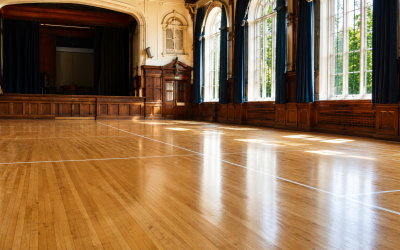
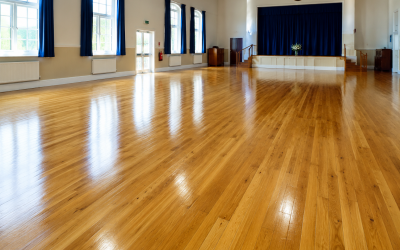
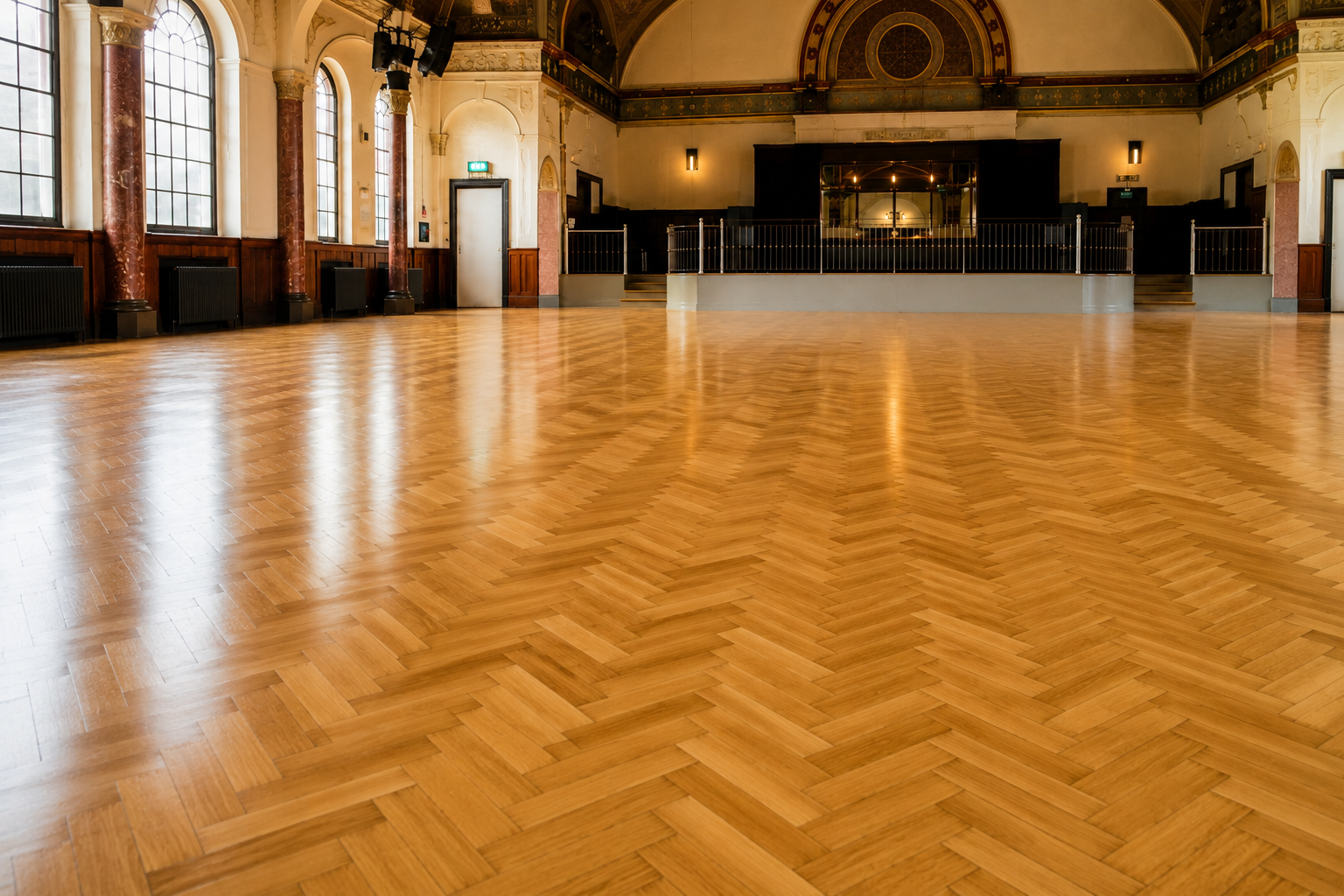
Hampstead NW3 is renowned for its rich cultural heritage, from historic community hubs like the Burgh House to the stunning architecture of local churches, schools, and private estates near the Heath. Many of these properties house magnificent, expansive timber floors that have seen decades of dancing, social gatherings, and community events. However, high footfall eventually takes its toll. Over time, heavy traffic strips away protective sealants, leaving timber vulnerable to deep-seated dirt, moisture ingress, structural shifting, and unsightly surface scratching.
For property managers and committee boards overseeing these local landmarks, keeping these spaces safe and visually striking is a constant priority. Addressing these issues requires specialist care. Investing in professional commercial wood floor maintenance in Hampstead not only preserves the character of your property but also ensures a durable, high-performance surface that meets modern safety standards.
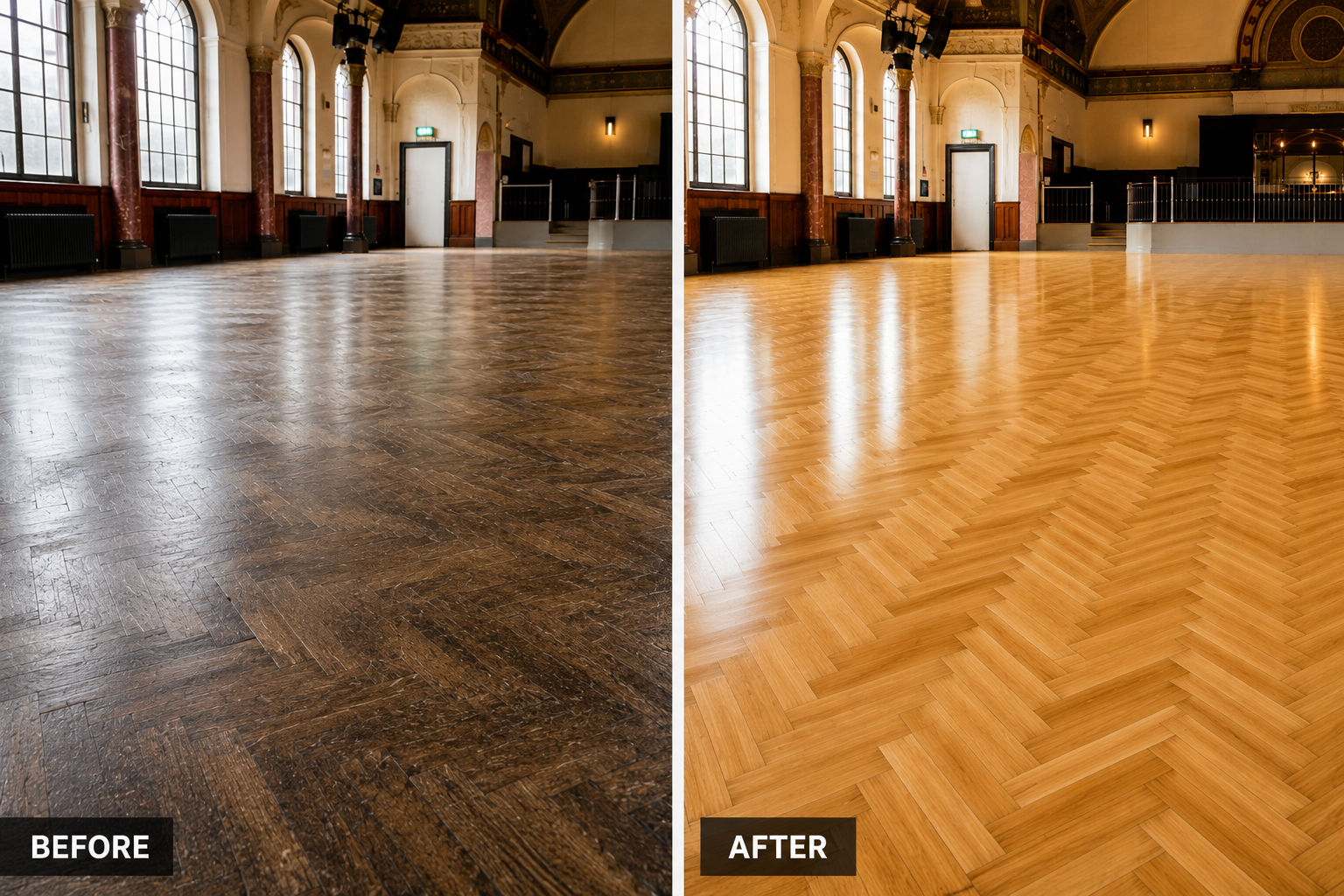
Why Professional Restoration Matters for High-Traffic Timber
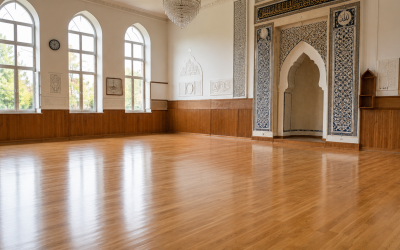
Dance hall floors endure unique physical stresses. Unlike standard commercial spaces, a dance floor requires an optimal balance of slip resistance and surface “glide.” It must absorb high-impact energy without splintering or shifting underfoot.
When managing a restoration project in a conservation area like Hampstead, a generic approach will not suffice. Older buildings frequently feature historic pitch pine, reclaimed oak, or intricate parquet blocks that require sympathetic handling. As an experienced commercial floor sanding contractor in Hampstead, our approach is rooted in understanding the specific species, age, and construction technique of your subfloor before a single machine touches the wood.
Our Step-by-Step Commercial Restoration Process
Restoring a large-scale commercial or heritage floor requires absolute precision. We break our on-site execution down into five distinct, professionally managed phases to ensure minimal disruption and maximum longevity.
1. Initial Assessment and Planning
Every project begins with a rigorous inspection of the structural integrity of the floor. We assess the thickness of the remaining wear layer (particularly on historic parquet or engineered boards) to determine how deeply we can safely sand. We also check for subsurface moisture issues, structural deflection, and hidden fixings that could compromise the final finish.
We recognize that commercial spaces cannot afford prolonged downtime. Whether you need us to work during school holidays, over a quiet weekend, or in specific phases to maintain public access, our scheduling is fully adaptable to your operational requirements.
2. Repairs, Board Replacement, and Gap Filling
Before sanding begins, the floor must be structurally sound:
Securing the Subfloor: Loose boards are carefully refastened using hidden structural screws or traditional face-nailing where heritage guidelines dictate.
Source-Matched Timber: Damaged or rotted sections are replaced using reclaimed timber that closely matches the grain, age, and species of your existing floor.
Stable Gap Filling: For traditional square-edged floorboards, we use a mix of fine resin timber dust and professional binders to fill structural gaps, preventing future drafts and dirt accumulation.
3. Sanding and Surface Preparation
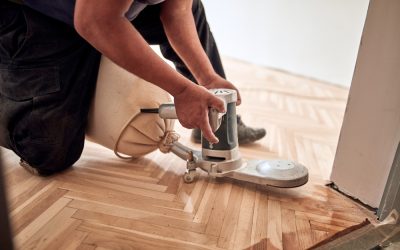
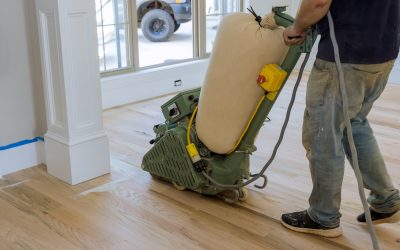
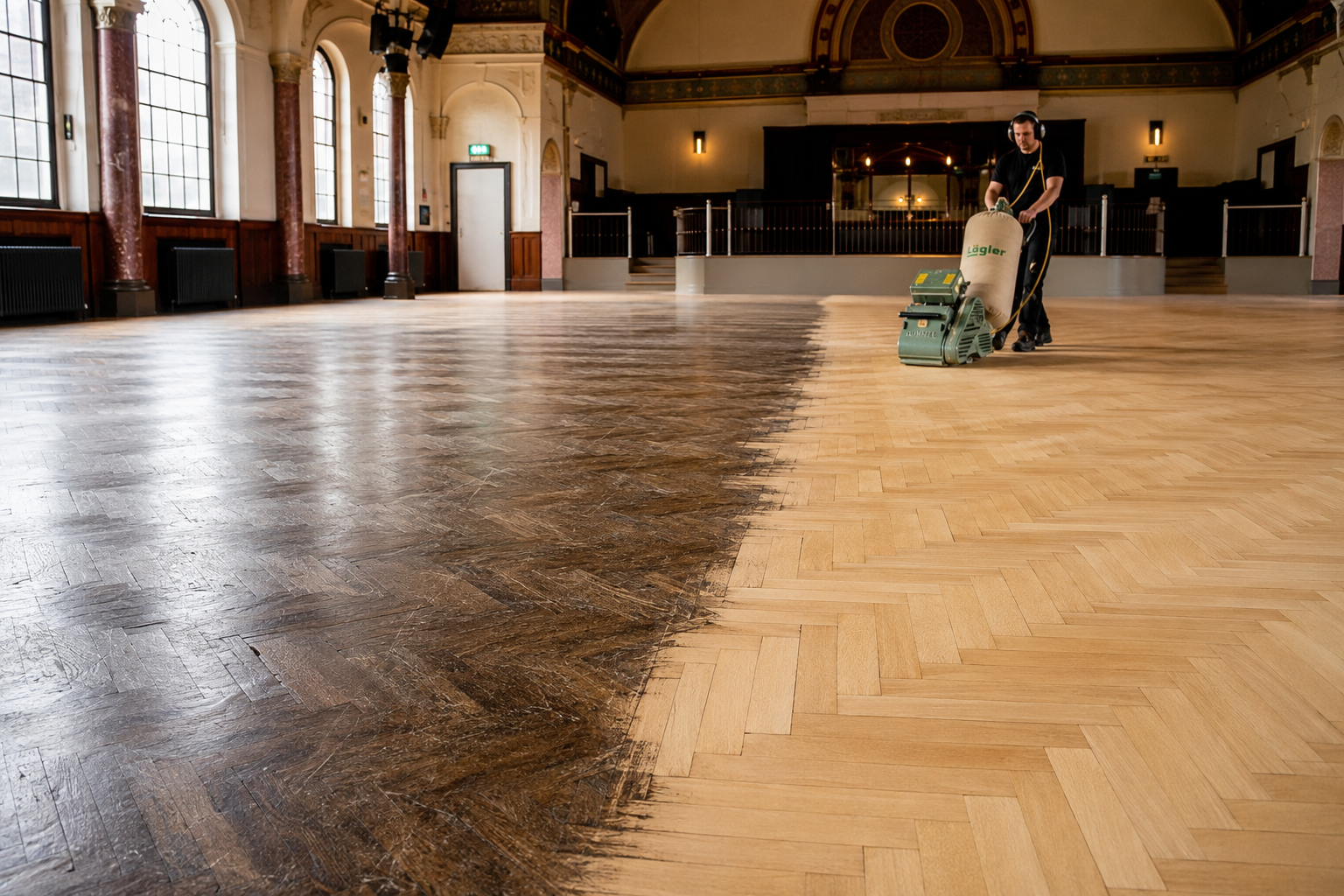
Using advanced, heavy-duty belt sanders equipped with integrated multi-stage cyclonic vacuum extraction, we achieve a virtually dust-free environment. This is critical for protecting delicate church organs, school electronics, or ornate decorative plasterwork common in NW3 properties. We progress systematically from coarse grit sandpaper to ultra-fine abrasives, removing old, discolored lacquers, deep scratches, and uneven heavy-traffic wear patterns to create a perfectly flat, uniform surface.
4. Commercial-Grade Finishing Options
The choice of sealant defines how your floor will perform under heavy use. We exclusively use premium, industry-certified products tailored to your specific traffic requirements:
Two-Component (2K) Polyurethane Lacquers: Brands like Bona and Loba offer heavy-duty 2K lacquers that provide maximum scratch and scuff resistance. These are ideal for multi-purpose school halls and commercial spaces requiring anti-slip certification (BS EN 13036-4).
Hardwax Oils: For heritage environments where a natural aesthetic is preferred, high-grade oils from Osmo penetrate deep into the wood grain. This option allows for localized spot repairs without the need to resand the entire hall in the future.
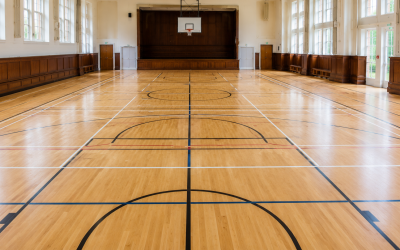
Sprung Floor Systems: For specialized dance environments, we can apply flexible, high-elasticity finishes approved by manufacturers like Junckers to complement traditional sprung floor designs.
5. Aftercare and Ongoing Maintenance
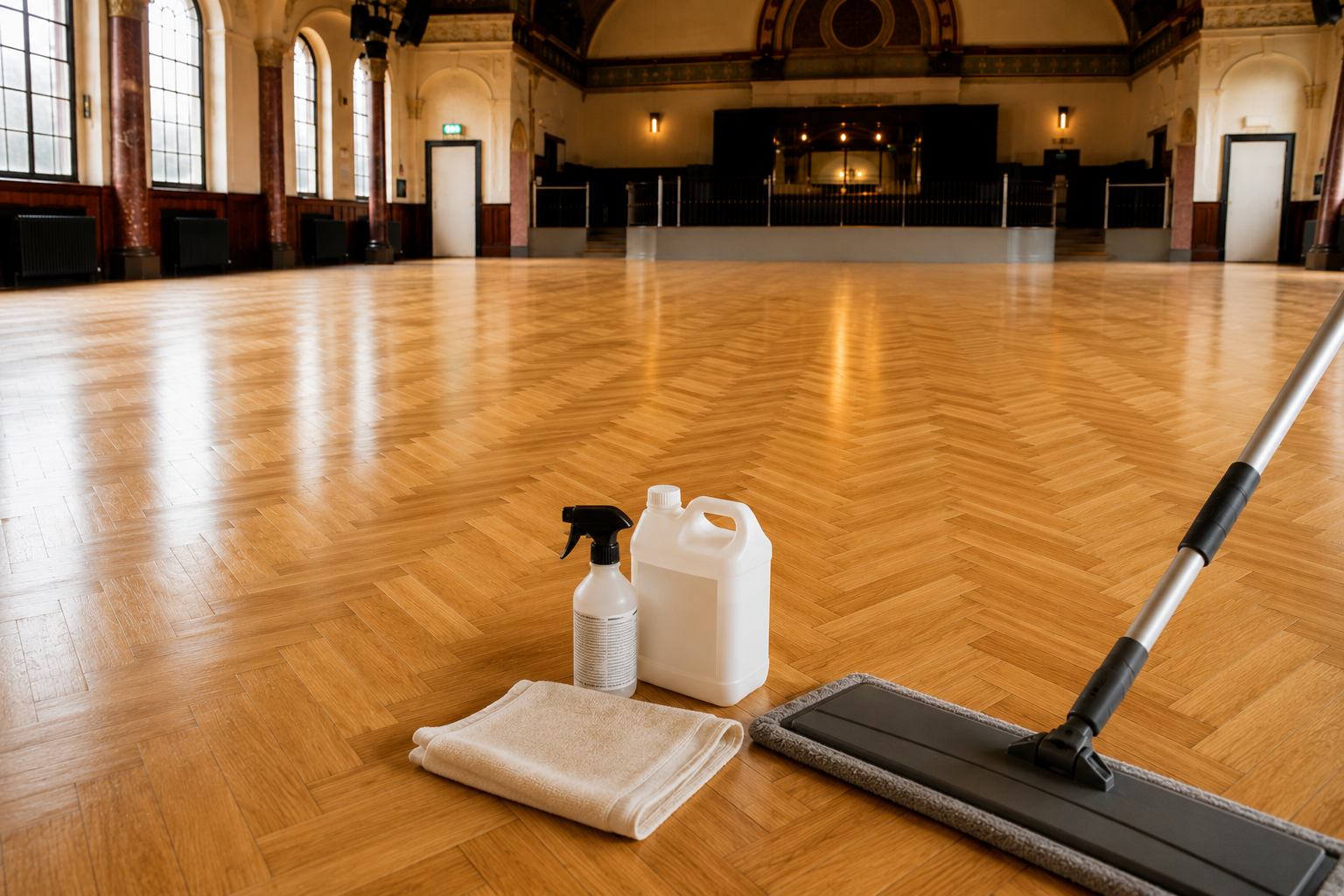
A restored floor is a significant commercial investment. To help you protect it, we provide tailored maintenance plans detailing correct cleaning frequencies, pH-neutral product recommendations, and proactive strategies to prevent premature wear.
Experienced Commercial Floor Sanding in Hampstead
With over 25 years of hands-on expertise in commercial and heritage timber preservation, we understand the logistical complexities of executing large-scale projects.
+------------------------------------+------------------------------------+
| Feature                            | Commercial Benefit                 |
+------------------------------------+------------------------------------+
| Dust-Controlled Machinery          | Protects interiors; no messy cleanup|
| Certified Anti-Slip Finishes       | Ensures public liability compliance|
| Flexible Out-of-Hours Scheduling    | Eliminates operational downtime    |
| Reclaimed Heritage Timber Stock    | Seamless, invisible structural repairs|
+------------------------------------+------------------------------------+
We do not believe in generic, automated estimates. Every floor has a unique history and structural condition. Our quoting process is transparent, detailed, and based on real-world metrics—utilizing site visits, accurate structural measurements, and detailed photo or video assessments to give you a fixed, dependable price.
Frequently Asked Questions
How long does it take to sand and finish a commercial dance hall floor?
Most commercial projects take between 2 to 4 days to complete, depending on the square footage and the extent of repairs needed. This timeline includes structural preparation, multiple stages of dust-controlled sanding, and the application of commercial-grade lacquers. We carefully plan our schedule around your opening hours, school holidays, or church service times to keep downtime to an absolute minimum.
Is your floor sanding process completely dust-free?
While no mechanical sanding can be 100% dustless, we use state-of-the-art, heavy-duty belt sanders fitted with multi-stage cyclonic vacuum extraction units. This setup captures up to 98% of airborne dust right at the source. This advanced containment protects delicate surroundings like decorative heritage plasterwork, church organs, or sensitive school electronic systems from fine timber particles.
What finishes do you recommend for high-traffic dance floors?
We highly recommend two-component (2K) commercial polyurethane lacquers from leading brands like Bona or Loba. These specialized finishes are engineered specifically for heavy footfall and high-impact use. They offer exceptional scratch resistance and can be specified with certified slip-resistance ratings to meet strict health and safety compliance standards.
Can you repair damaged or missing parquet blocks and floorboards?
Yes, structural timber repairs are a core part of our service. We carry an extensive stock of aged, reclaimed timber, allowing us to find a close match for historic pitch pine, oak, or maple floorboards. Loose blocks or boards are secured mechanically or with high-strength structural adhesives before the sanding process begins to ensure a perfectly level final surface.
How long after the final coat is applied can the floor be danced on?
Modern commercial 2K lacquers dry relatively quickly and can usually handle light foot traffic within 24 hours. However, the finish takes roughly 3 to 5 days to fully cure and achieve its maximum chemical hardness. We advise keeping heavy usage, high heels, and floor-based furniture off the surface until the full curing process is complete.
Do we need to do any preparation before your team arrives?
To ensure a smooth workflow, the entire floor area must be completely clear of all furniture, staging, curtains, and debris before our team arrives on-site. Any fixed electrical floor sockets should be clearly identified, and full, uninterrupted access to reliable mains electricity must be available.
How often will a commercial timber floor require resanding?
In heavy-traffic commercial or public environments, a professionally restored floor typically needs full resanding every 7 to 10 years. However, this lifespan can be significantly extended by implementing a proactive maintenance routine, which includes applying fresh protective topcoats (known as a “clean and coat”) before the original lacquer wears down to bare wood.
Are your finishes compliant with UK public safety and slip regulations?
Absolutely. The commercial-grade 2K polyurethanes we use comply directly with British Standard BS EN 13036-4 for slip resistance. This ensures your restored floor meets modern public liability requirements, providing a safe, reliable surface for dancers, athletes, and the general public alike.
Can you work outside of normal business hours?
Yes, we understand that closing a community hall, school, or commercial venue during the week impacts your operations. We offer flexible scheduling, including weekend, night shift, and school holiday booking slots, to complete the restoration work with minimal disruption to your daily schedule or calendar of events.
How do we get an accurate quote for our dance hall floor?
We provide transparent, fixed quotes based on your floor’s actual condition and dimensions. You can start the process immediately by calling us at 0800 335 7565 or by emailing your floor measurements. We also highly encourage sending us quick photos or a brief walk-through video via WhatsApp, allowing us to evaluate repairs and give you an accurate, reliable initial estimate.

What you should do next
Give your timber floors the expert care, durability, and historic respect they deserve. Trust a dedicated commercial floor sanding in Hampstead specialist to transform your space safely, efficiently, and to the highest professional standards.
Contact our team today on 0800 335 7565 to discuss your project requirements. Alternatively, you can email us your floor measurements or share site photos and videos directly via WhatsApp for a fast, comprehensive initial assessment.