Commercial Floor Sanding in Hampstead NW3
Commercial timber floors in Hampstead take a harder beating than most domestic floors ever see. Shops on Hampstead High Street, busy cafés around Heath Street, offices in converted Victorian properties and larger institutional buildings across NW3 all develop the same familiar problems: worn lacquer at entrances, blackened traffic lanes, split boards, loose parquet and finishes that have become difficult to clean properly.
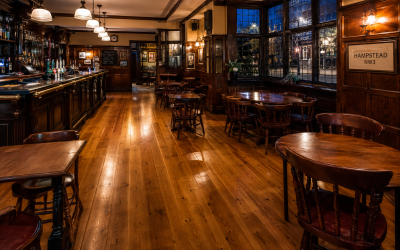
We carry out commercial floor sanding in Hampstead NW3 for offices, coworking spaces, shops, restaurants, pubs, hotels, clinics, schools, colleges, universities, places of worship, gyms, studios, workshops, storage facilities and other working premises. Where sanding alone will not solve the underlying condition, our Commercial Floor Restoration in Hampstead service covers board repairs, parquet re-bonding, gap filling and specification of a new protective finish.
For floors that are structurally sound but losing their protection, we can also schedule Commercial Floor maintenance in Hampstead or Commercial Floor Polishing in Hampstead without automatically taking the floor back to bare timber. The correct treatment depends on timber species, existing coating, wear pattern, moisture condition and how quickly the premises need to return to service.
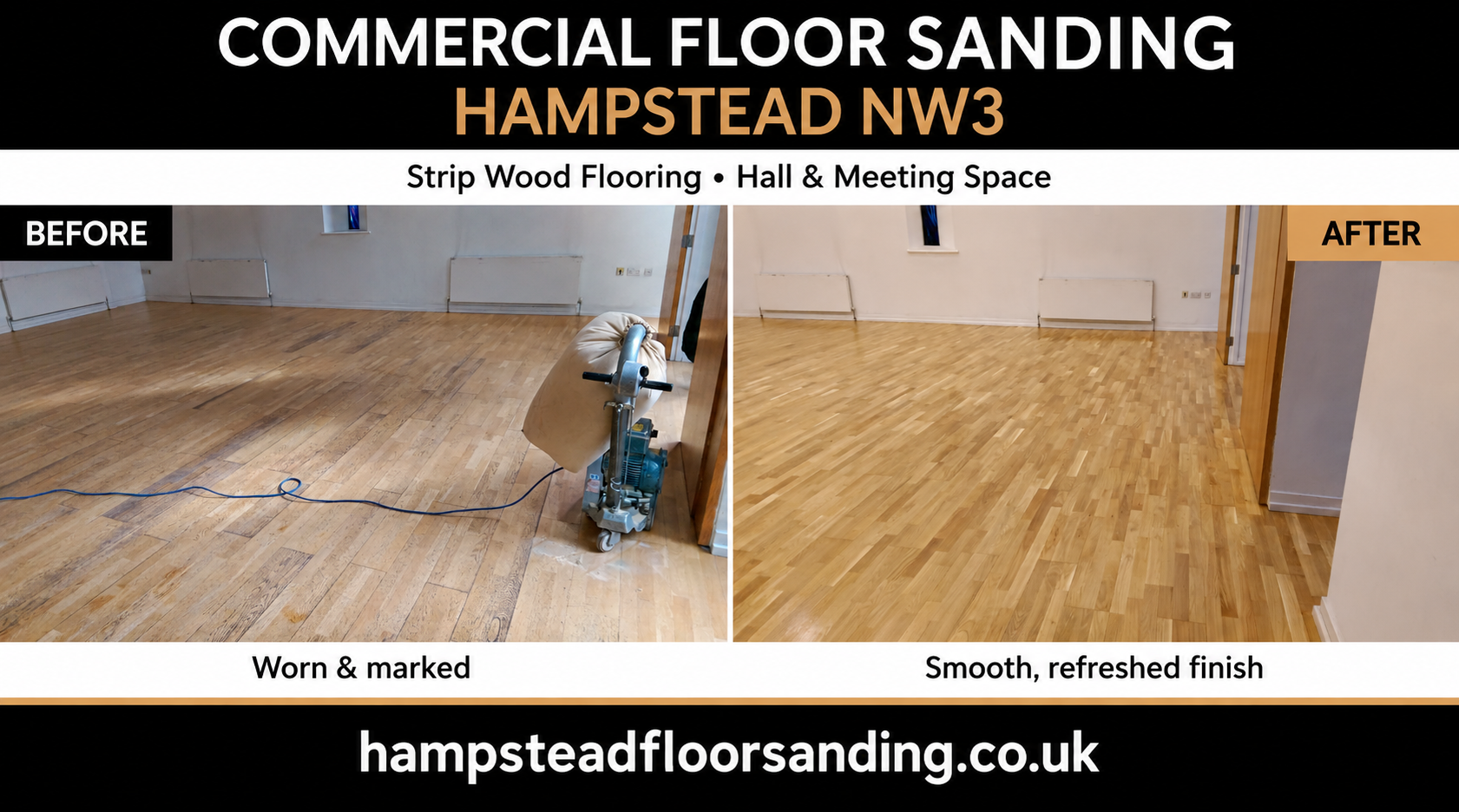
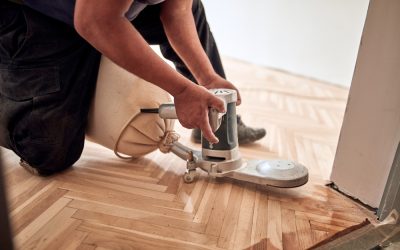
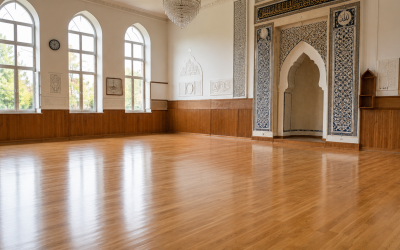
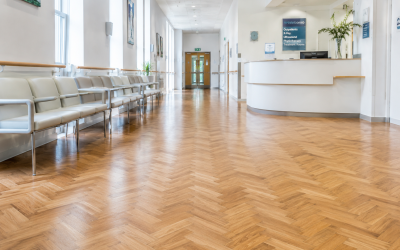
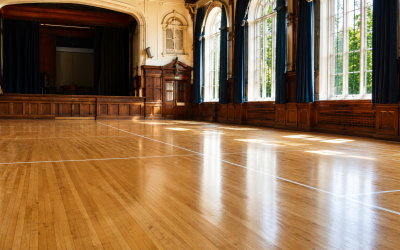
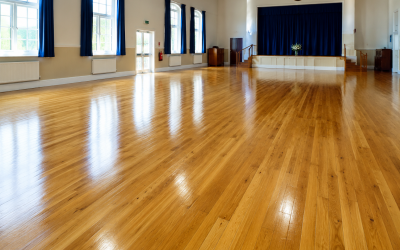
Before and after strip wood floor restoration in a hall, showcasing commercial floor sanding services for Hampstead NW3.
Commercial Timber Floors in Hampstead Need a Different Approach
NW3 has an unusually mixed commercial building stock. Around Hampstead High Street and Heath Street we regularly encounter older shop units and converted buildings with suspended timber floors, while larger Victorian and Edwardian properties further towards Fitzjohn’s Avenue, Frognal and the conservation areas may contain original pine boards, oak strip flooring or parquet installed many decades ago.
Those floors cannot be treated as if they were a modern domestic engineered board in an empty flat. Threshold movement, historic repairs, basement moisture, shopfront draughts, heavy furniture, wheeled equipment and thousands of repeated footfalls all affect how we prepare and finish the timber.
We identify the species before committing to abrasives, filler or finish. Quartersawn oak behaves differently from old pitch pine, teak contains natural oils that affect coating adhesion, and thin reclaimed parquet blocks require far more restraint than a thick modern oak board.
Typical Commercial Floor Problems We Find
- Open board and parquet joints: gaps collect grit, food debris and cleaning residues and can become unhygienic in cafés, clinics, schools and hospitality premises.
- Loose parquet blocks: isolated blocks can rock under load or release completely when an old brittle adhesive bed fails.
- Entrance wear: grit carried in from pavements acts like abrasive paper and can cut through a lacquer film much faster than wear in the centre of a room.
- Slip-risk changes: inappropriate polish, grease contamination or an over-smooth coating can alter underfoot slip characteristics in customer and staff areas.
- Moisture ingress: basement slabs, leaking services, wet cleaning and poorly ventilated subfloors can cause cupping, adhesive failure or black staining.
- Previous coating incompatibility: wax, silicone dressings and domestic polish can interfere with adhesion of professional waterborne lacquers.
- Over-sanding: older floors may already have been sanded several times, leaving limited timber above tongues, fixings or parquet joints.
- Localised structural movement: deflection, cracked boards and unsupported ends must be dealt with before finishing rather than hidden beneath filler.
Why Domestic Sanding Methods and Shop-Bought Polish Often Fail
A commercial floor has to survive concentrated traffic, entrance grit, chair movement, cleaning chemicals and shorter maintenance windows. A one-component domestic lacquer or supermarket polish may look acceptable for a few weeks but is rarely a sensible specification for a busy reception, restaurant, retail unit or school corridor.
Polish is particularly misunderstood. Applying polish over degraded lacquer does not replace the missing wear layer, and applying it over contaminated or partly exposed timber can make a later professional recoat more difficult.
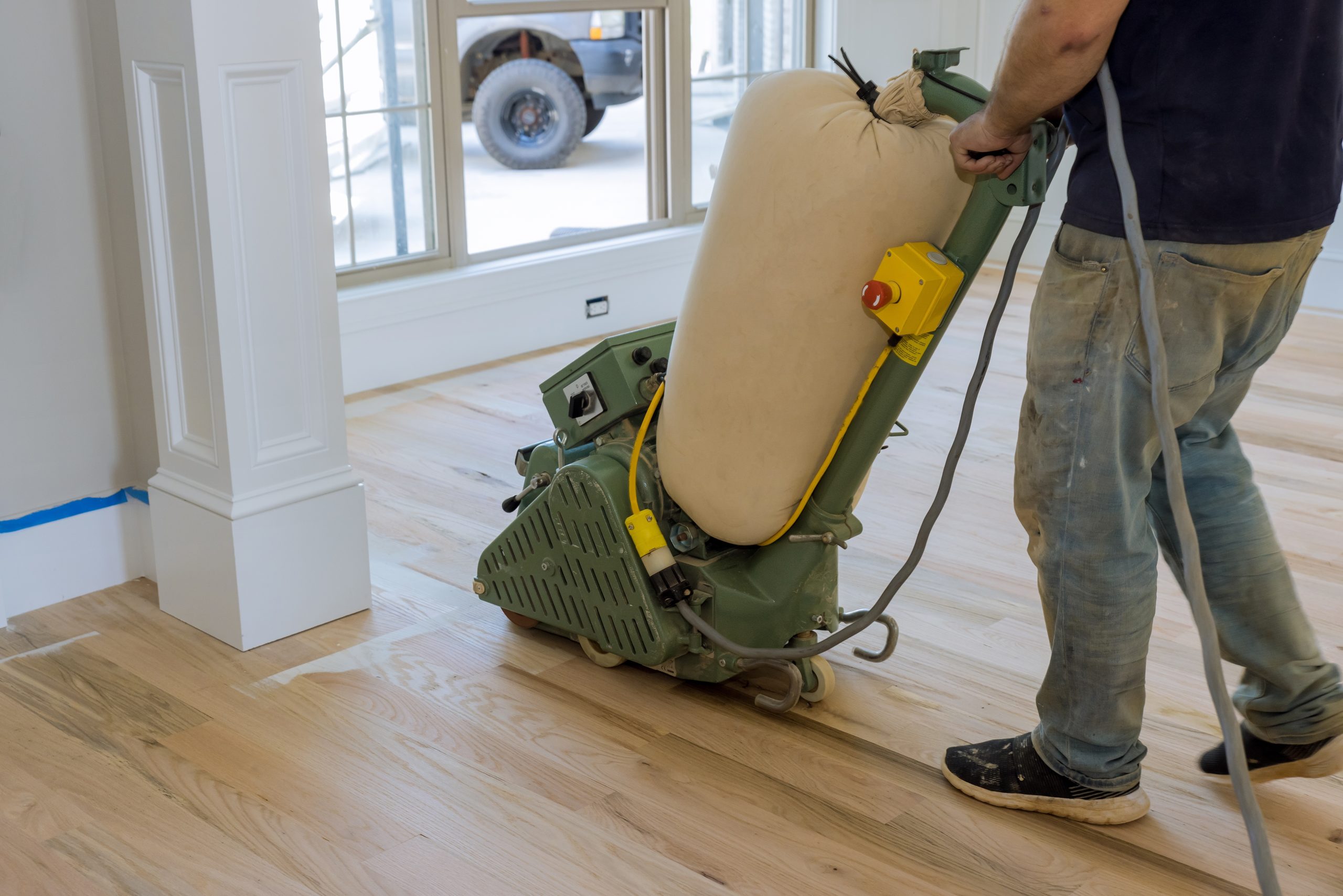
The same applies to sanding machinery. Light hire machines can leave chatter, dish soft boards and struggle to remove hardened two-pack coatings evenly. Our main floor preparation is carried out with professional belt and edging equipment, including Lägler Hummel belt sanders where appropriate to the floor construction and access.
Our Commercial Floor Restoration Process in Hampstead
Step 1: Subfloor Audit & Moisture Testing
Before machinery is unloaded, we establish what the floor is actually doing. That means checking board thickness, movement, previous repairs, floor build-up, adhesive condition, perimeter expansion, heating influence and any obvious signs of moisture.
Where moisture is suspected, we carry out appropriate hygrometer or moisture-meter checks rather than sanding first and investigating later. Timber movement caused by an active leak, damp screed or persistently high relative humidity must be resolved before a stable repair and coating system can be expected.
On larger occupied premises, the survey also records fire routes, power availability, loading access, lift restrictions, public interfaces and sections that must remain operational. This information forms part of the working method and, where required by the principal contractor or facilities team, the RAMS documentation.
Step 2: Timber Repairs, Re-bonding & Resin Gap-Filling
Loose boards are secured properly rather than filled around. Damaged timber is repaired using compatible species and dimensions where practicable, with particular care on older pitch pine and traditional parquet where an obvious modern patch can stand out after sanding.
Loose parquet blocks are lifted, old friable residue removed and the blocks re-bonded using a suitable flexible adhesive. Where the specification calls for it, we use silane-based parquet adhesives with low-emission credentials such as EMICODE EC1 Plus-rated products.
For suitable narrow joints we can prepare a resin-slurry filler using clean sanding dust from the floor itself. This is useful for stabilising fine gaps, but we do not force rigid filler into wide seasonal board gaps where timber movement will simply fracture it again.
Large missing sections, rotten board ends, failed sleeper support or movement around service penetrations are repaired mechanically before cosmetic work starts. Filling is not a substitute for structure.
Step 3: HEPA Dust-Controlled Sanding & Surface Preparation
Commercial sanding normally progresses through several abrasive grades rather than trying to remove everything with one aggressive cut. A Lägler Hummel belt sander is used for the main field where appropriate, with professional edging and detail machines for perimeters, radiator lines, counters and restricted areas.
Dust is controlled at source using professional extraction with HEPA H14 filtration where specified for the site. No timber sanding operation is literally dust-free, but effective extraction makes an enormous difference to airborne particulate, cleaning time and the risk of dust migrating into neighbouring offices, retail stock or treatment areas.
Between abrasive stages we inspect for drum marks, edging halos, raised fixings and contamination. Final finishing grades are selected for the coating system; sanding unnecessarily fine can burnish some timbers and reduce the mechanical key required by the primer or lacquer.
For occupied sites we can isolate work areas, protect doors and ventilation interfaces and phase noisy work into agreed out-of-hours periods. Where an adjoining business remains open, containment and access planning are agreed before sanding begins.
Step 4: High-Traffic Finishes – 2K Lacquers, Hardwax Oils & Anti-Slip Systems
The finish is specified around the building’s use rather than chosen from a colour card alone. For many high-traffic commercial interiors we prefer professional two-component waterborne polyurethane lacquers, where a cross-linking catalyst increases chemical and abrasion resistance compared with a basic single-pack domestic finish.
Restaurants, cafés, pubs and takeaway premises need particular consideration around cleaning chemistry, spill resistance and entrance contamination. Offices and coworking spaces tend to suffer concentrated chair and castor wear, while schools, clinics, gyms and public buildings usually place greater emphasis on cleaning regimes, indoor-air emissions and controlled slip performance.
Hardwax oils remain useful on some floors where localised future repairability is a priority, but they are not automatically the correct answer for every heavy-traffic site. Teak and other oily timbers may also require a different preparation or primer specification to obtain dependable adhesion.
Where slip resistance is a contractual requirement, the coating specification can be matched to the use of the area and independently tested where required. BS 7976-2 relates to operation of the pendulum tester used for assessing slip resistance, so we do not make casual claims such as “non-slip” without defining the test conditions and required performance.
Step 5: Cure Times, Reoccupation & Aftercare
Dry is not the same as cured. A waterborne 2K lacquer may permit careful foot traffic before it has developed its final resistance to furniture, wheeled loads, wet cleaning or chemical exposure, so we set the reopening sequence around the manufacturer’s technical data and the site’s actual demands.
Where possible, furniture and point loads are returned in stages rather than dragged back as soon as the surface feels dry. Protective pads, clean entrance matting and the correct neutral cleaning product will extend the period before another full sanding cycle is required.
For buildings that cannot tolerate periodic full closure, planned recoating is usually more economical than waiting until the wear layer has disappeared completely. Our commercial floor maintenance in Hampstead programmes can be arranged around quieter trading periods, school holidays or planned maintenance shutdowns.
Commercial Floor Sanding for Hampstead Businesses and Public Buildings
We work across a broad range of commercial and institutional properties in Hampstead and the surrounding NW3 area. Each one produces a different wear pattern and different operational restrictions.
Offices, Coworking Spaces & Serviced Offices
Office floors often wear first beneath task chairs, breakout areas, tea points and entrance routes. We can phase sanding around desk moves, weekend closures or floor-by-floor refurbishment programmes so the whole premises does not have to close at once.
Shops, Boutiques, Showrooms & Shopping Units
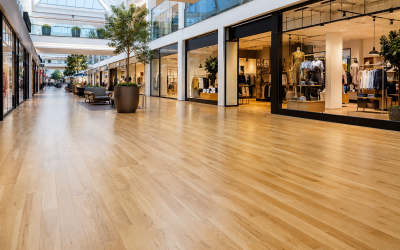
Retail work is usually dictated by opening hours and visual standards. We plan noisy sanding, coating and curing around trading windows, with particular attention to shopfront entrances where pavement grit and moisture create the most aggressive wear.
Restaurants, Cafés, Pubs & Takeaway Units
Food and drink premises commonly show grease contamination around service areas, chair abrasion, liquid staining and repeated wet cleaning. Existing residues have to be removed properly before a new coating is expected to bond.
Factories, Workshops, Storage & Distribution Premises
Older commercial buildings sometimes retain timber offices, mezzanine floors, studios or workshop areas beside industrial operations. These require careful assessment of impact damage, point loading, oil contamination and the practicality of maintaining a coated timber finish in that environment.
Gyms, Cinemas, Event Venues & Studios
Large open floors magnify sanding defects, so machine control and even abrasive sequencing matter. We also account for equipment loads, rubber transfer, staging, audience traffic and the need to reopen on a fixed event schedule.
Hotels, Hostels & Serviced Accommodation
Hospitality projects are normally phased by room, corridor, landing or public area. Early communication with housekeeping and management prevents newly coated floors being exposed to cleaning machines, luggage trolleys or furniture before the finish is ready.
Clinics, Dental Practices & Treatment Rooms
Clinical settings demand controlled dust, sensible product selection and predictable cleaning performance. Where indoor-air emissions are important, we can specify suitable low-emission installation products and provide the relevant product information for the facilities team.
Schools, Colleges, Universities & Academies
Education work is frequently programmed into weekends, half-term or longer holidays. Assembly halls, classrooms, libraries and corridors require different finishes depending on traffic, furniture movement and cleaning equipment.
Churches, Mosques, Temples & Community Buildings
Places of worship often contain older boarded floors or parquet that has survived several generations of repairs. We take a conservative approach to sanding depth and try to retain sound historic timber rather than replacing it merely for visual uniformity.
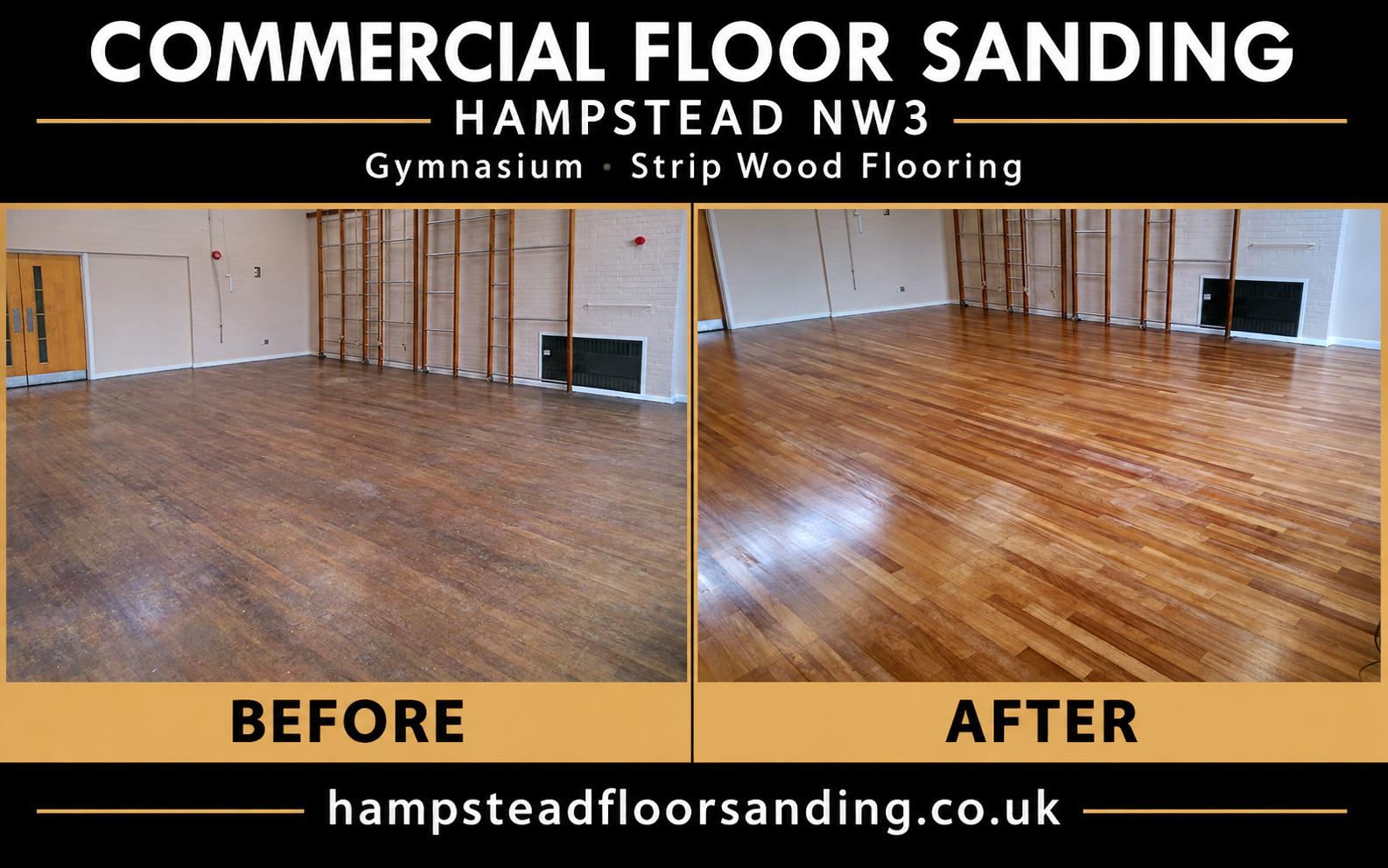
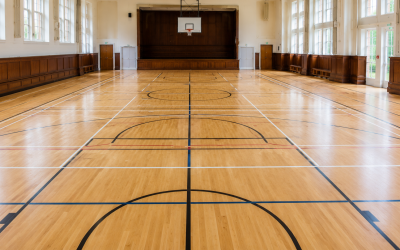
Before and after strip wood floor restoration in a hall, showcasing commercial floor sanding services for Hampstead NW3.
Working Around Hampstead’s Older and Conservation-Area Buildings
Hampstead’s commercial centre is not made up of uniform modern units. Properties around Hampstead High Street, Heath Street, Flask Walk and the surrounding streets include early buildings, later Victorian shopfronts, converted houses and premises altered repeatedly over many decades.
That history often shows up in the floor. A single room may contain original pine, later patch boards, a replaced hearth section, modern plywood, old bitumen adhesive and a parquet repair from a completely different period.
In conservation-area properties we avoid unnecessary destructive work and record anything unusual before altering it. Where listed-building considerations or landlord approvals apply, those requirements sit above the urge to make every old board look artificially new.
Commercial Health, Safety & Site Documentation
Commercial floor restoration involves wood dust, electrical equipment, noise, coatings, adhesives and sometimes products containing reactive components. The job therefore has to be managed as site work, not simply treated as decorating.
Where required, we provide task-specific RAMS covering sanding, extraction, manual handling, electrical equipment, coating application, exclusion areas and site access. Product safety data is reviewed under COSHH, including the control measures required for adhesives, primers, cleaners, hardeners and polyurethane coating components.
We can also work to principal-contractor permit systems, induction procedures and agreed working zones. Routes needed for fire escape, staff access or customer movement are identified before sections are closed off.
Low-VOC does not mean “no chemical controls required”. Product selection, ventilation, PPE, curing conditions and safe re-entry must still follow the actual safety data and technical specification.
Commercial Working Hours and Phased Floor Restoration
Closing a business for a week is not realistic for many Hampstead operators. We therefore agree the sequence before the start date and separate sanding time from coating and cure time when necessary.
| Working Arrangement | Operational Benefit | Typical Facility Suitability |
|---|---|---|
| Overnight | Noisy sanding and initial coating can be carried out after staff or customers leave, subject to cure requirements and local access restrictions. | Retail units, restaurants, offices, clinics, reception areas and hospitality premises. |
| Weekend Phased | Provides a longer uninterrupted window for sanding, repairs and multiple coating stages while reducing weekday disruption. | Offices, schools, coworking spaces, showrooms, dental practices and institutional buildings. |
| Sectional | Keeps part of the building operational while defined zones are repaired, sanded, coated and allowed to cure. | Hotels, large offices, schools, event venues, community buildings and larger retail premises. |
What Happens Before We Quote?
A useful commercial quote starts with information rather than a guessed square-metre rate. Site photographs, short videos, approximate floor area and a basic floor plan usually tell us enough to identify the likely scope and whether a physical survey is required.
For larger or technically uncertain projects, we inspect the floor in person before fixing the specification. We look at access, floor construction, loose timber, previous coatings, moisture risk, repairs, furniture movement, power, working hours and the number of phases required.
The quotation then separates the relevant operations so facilities managers and contractors can see what is included. You can also review examples of completed work on our floor sanding gallery and compare typical budget guidance on our floor sanding prices page before arranging a survey.
Experienced Commercial Floor Sanding Team
Commercial work needs tradespeople who understand that finishing the timber is only one part of the job. Access times, inductions, neighbours, drying conditions, customer routes, other contractors and reopening deadlines all have to be managed alongside the floor itself.
Our commercial projects are undertaken by experienced floor-restoration operatives, with CSCS-carded personnel where site rules require it and commercial liability insurance appropriate to the agreed scope. Relevant documentation can be supplied to facilities managers, managing agents or principal contractors before mobilisation.
We do not base a commercial specification on photographs alone when the floor condition makes that unsafe. Photos and video are useful for an initial assessment, but a physical site survey is used where timber condition, moisture, coating compatibility or logistics need to be established properly.
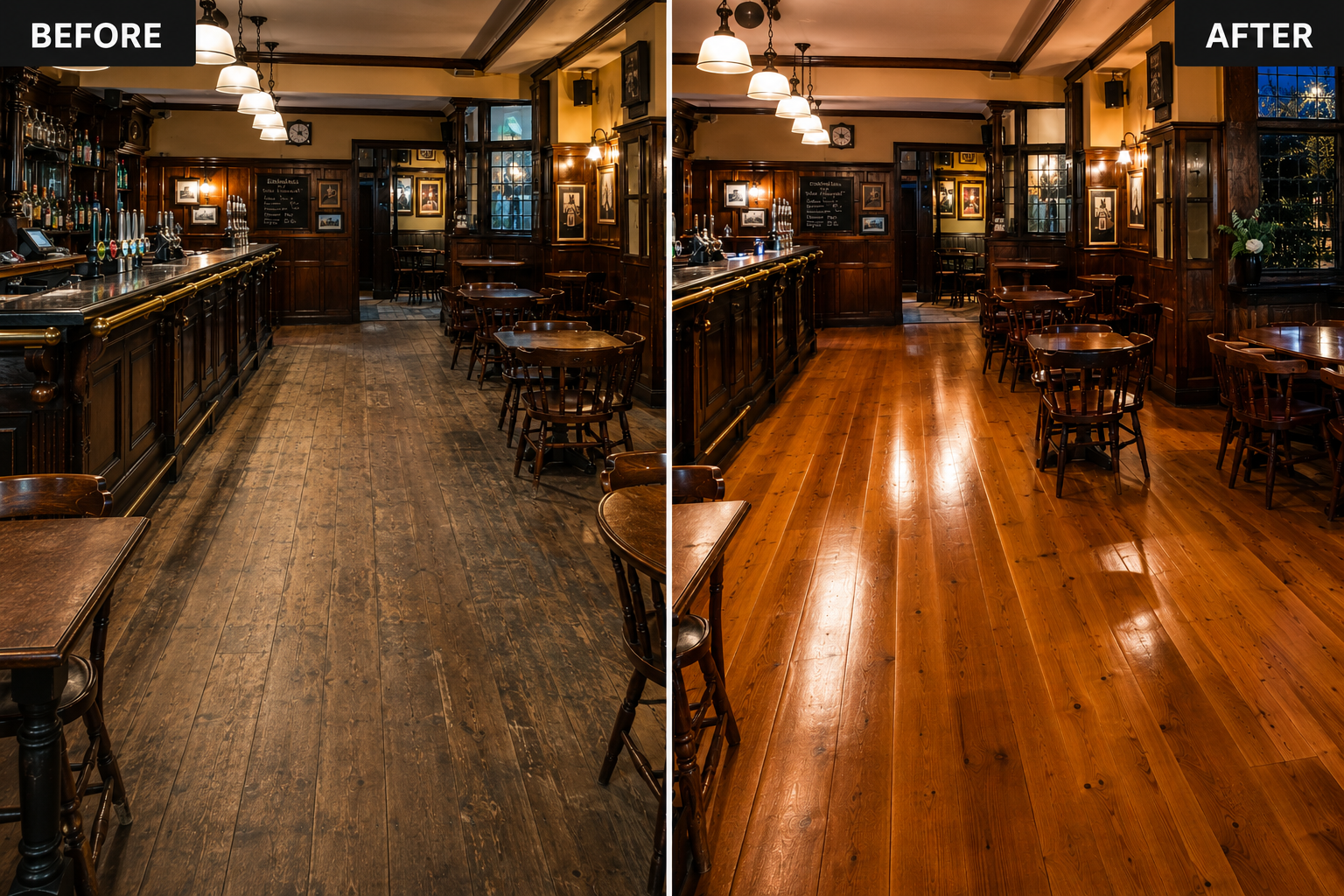
Maintenance After Commercial Floor Restoration
The cheapest sanding job is the one you do not have to repeat prematurely. Once a commercial floor has been restored, entrance matting, correct chair protection and a suitable cleaning regime make a substantial difference to coating life.
Avoid steam cleaners, aggressive degreasers and unapproved polish unless the finish manufacturer specifically permits them. Repeated use of unsuitable chemicals can soften, haze or contaminate a coating long before the timber itself needs sanding again.
Where wear is caught early, a professional clean, key and recoat may restore the protective layer without another full cut to bare wood. This is particularly useful for busy offices, reception areas, restaurants and schools where preserving the remaining timber thickness matters.